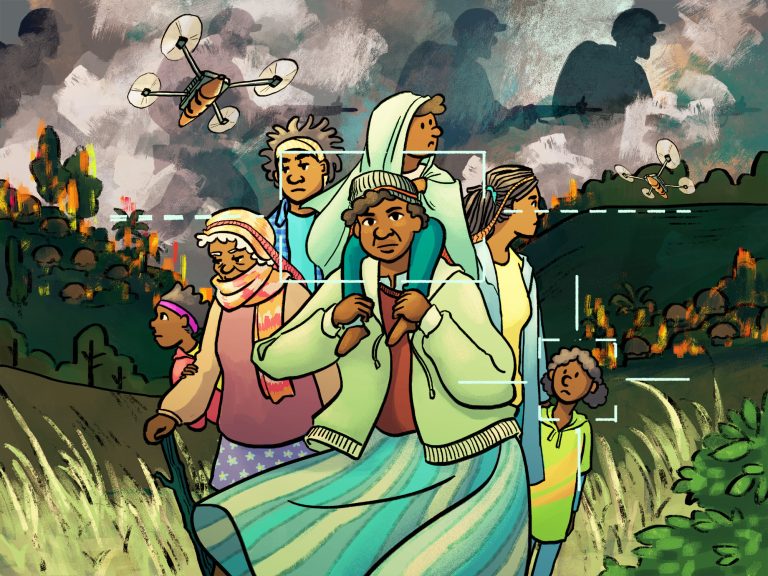

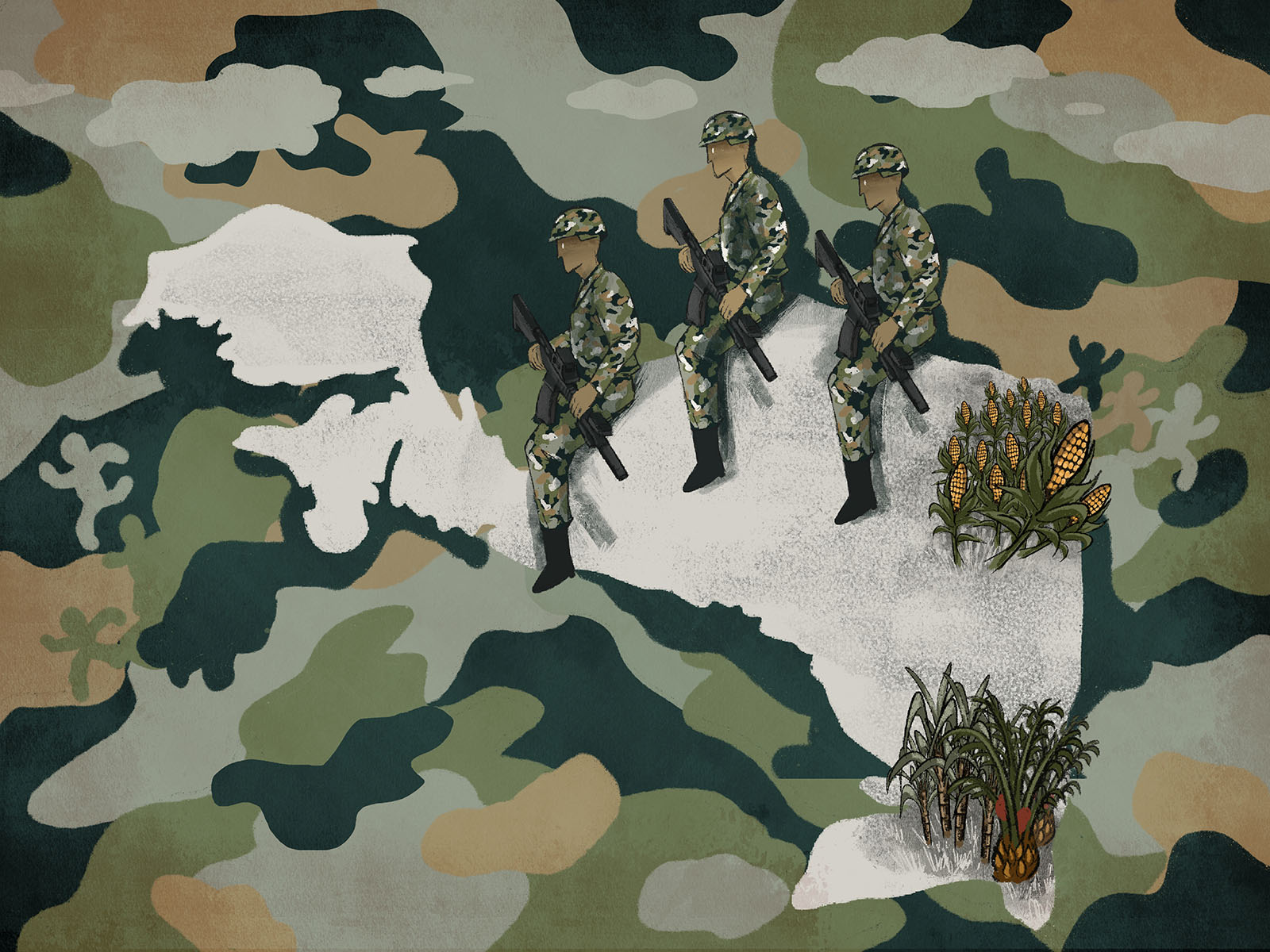
Soldiers and police have increasingly encroached on Papuans’ daily lives, not only to maintain security but also to advance a development agenda built on violence.
For more than half a century, armed conflict has raged in Papua. Throughout this period, the Indonesian government has conducted military operations, deploying tens of thousands of soldiers and police to a lopsided war it still cannot win.
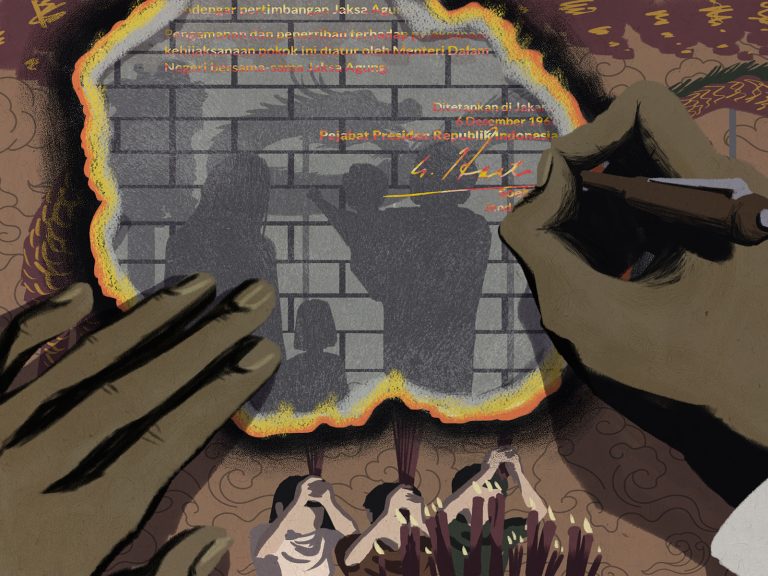
To understand the current situation, we must look back to 1969, when the western part of New Guinea officially became Indonesian territory following the Act of Free Choice, known locally as Pepera. Many Papuans, however, refer to it as “the act of no choice” because Indonesian military and intelligence forces marred the process with intimidation and manipulation.
The New Order military regime, which had recently come to power, persuaded the United Nations and Western governments that the Papua issue should be resolved through “deliberation toward consensus”. The regime claimed that most Papuans were uneducated and therefore unfit to make such a decision.
Following this colonial and racist logic, Indonesian officials and UN representatives selected 1,026 Papuans they deemed eligible to take part. Soon after, they all reached a “consensus” to join Indonesia.
Rebellion emerged shortly after Pepera, culminating in the proclamation of the Republic of West Papua by Seth Jafeth Roemkorem and Jacob Prai on July 1, 1971. The Indonesian military responded with overwhelming force, swiftly crushing what was then a sporadic resistance movement.
Since then, Indonesia’s military presence in Papua has intensified to confront the pro-independence movement, including the various factions and wings of the Free Papua Organization (OPM). One such group is the West Papua National Liberation Army (TPNPB), OPM’s armed wing.
Over time, soldiers and police have increasingly encroached on Papuans’ daily lives, not only to maintain security but also to advance a development agenda built on violence. No wonder Papua now has Indonesia’s heaviest concentration of security forces, both military and police.
Our research shows that at least 83,177 soldiers and police officers are currently deployed across six provinces in Papua. Of that total, 56,517 are from the Indonesian Armed Forces (TNI) and 26,660 from the National Police (Polri).
These figures cover only “organic” forces, meaning personnel assigned to Papua-based units, rather than temporary reinforcements deployed from elsewhere.
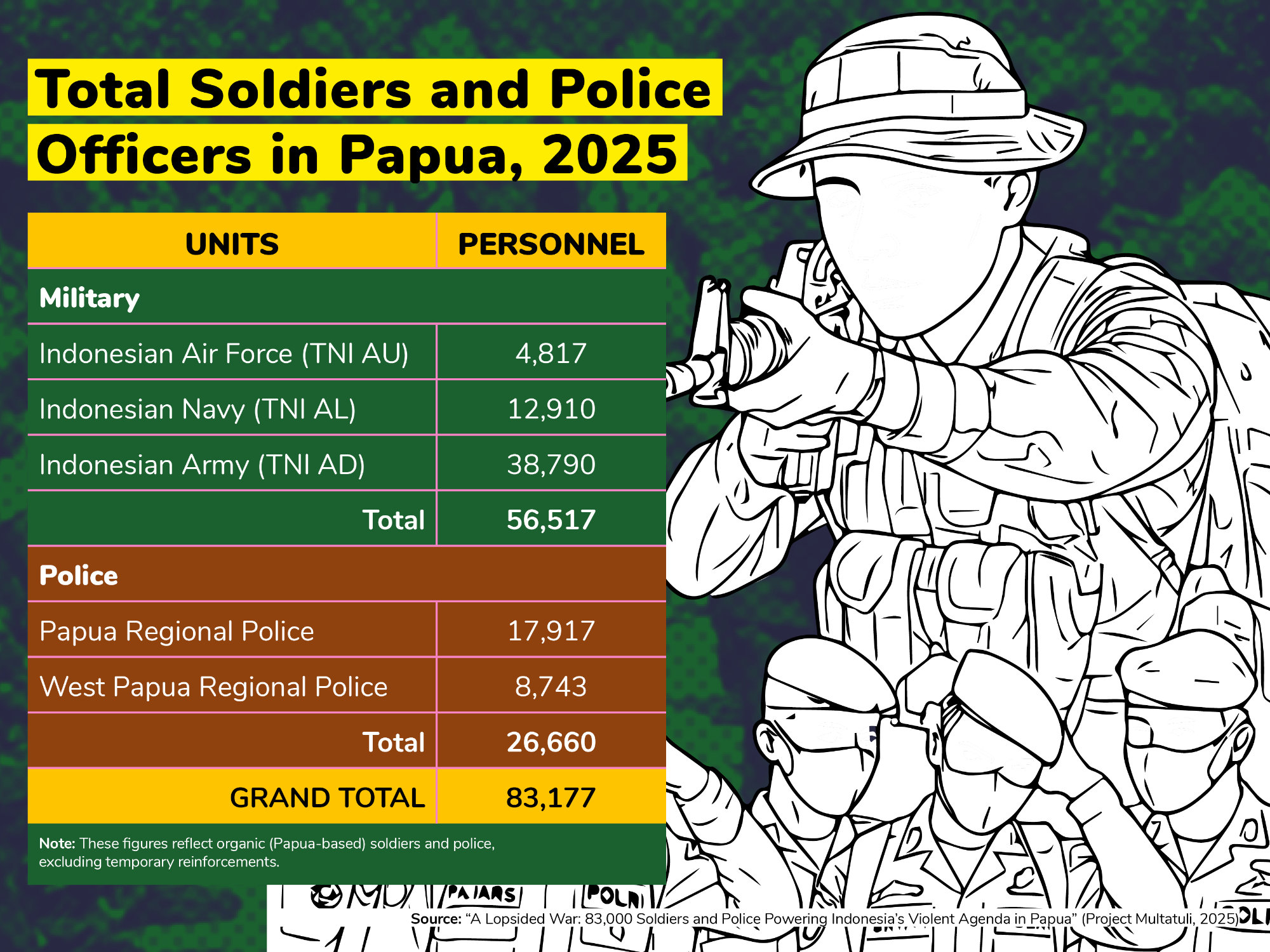
Given the uncertainty around the number of TNI troops deployed, we used multiple methods to estimate personnel across the Army (AD), Navy (AL), and Air Force (AU).
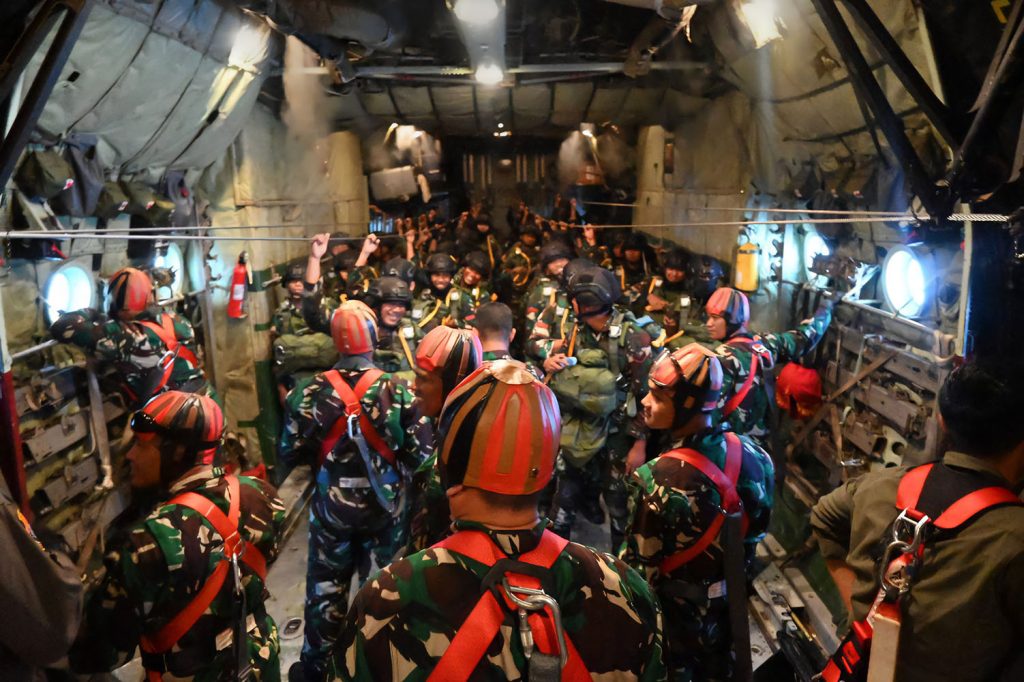
For the Air Force, we compiled details on its units from a range of documents and cross-checked our findings through interviews. We also analyzed photographs, including flag-ceremony images, to estimate personnel in smaller units such as radar units (Satrad) and air bases (Lanud).
For the Navy, we reviewed documents related to Fleet Command (Koarmada) III, headquartered in Sorong, Southwest Papua, which is responsible for maritime defense in eastern Indonesia. We calculated personnel for Marine Force (Pasmar) 3, which includes an Infantry Brigade (Brigif), Marine Base Defense Battalions (Yonmarhanlan) in three areas, Combat Support Regiments (Menbanpur), and several small detachments.
For the Army, we examined internal documents, cross-checked our findings in the field, and reviewed media coverage and social media posts from relevant units.
Police figures in Papua, meanwhile, were easier to compile from official documents and news reports, as the police have been relatively transparent about their numbers.
We could not, however, determine the number of intelligence personnel, including officers from the State Intelligence Agency (BIN), who are coordinated through its regional offices (BINDA).
This report also excludes troops deployed from outside Papua under the Operational Command Authority (BKO) mechanism. These personnel typically serve on annual rotations. We plan to publish a separate article examining the various BKO task forces operating in Papua.
Even using conservative estimates, and without counting BKO task forces, the numbers we present in this report remain substantial.
According to police data, 24 separatist networks operate in Papua with 1,438 members. They have only 361 firearms, and otherwise rely on traditional weapons such as spears and machetes.
With 83,177 soldiers and police present, the number of organic forces in Papua is 58 times larger than the membership of these separatist groups.
Statistics Indonesia (BPS) data show the combined population of six provinces in Papua reached about 5.8 million in 2025. With 56,517 TNI personnel and 26,660 Polri personnel, there is one soldier for every 103 Papuan residents and one police officer for every 219 residents.
Nationally, the ratios are dramatically different. In 2024, BPS recorded Indonesia’s population at 281.6 million, with 404,500 TNI personnel and 464,248 Polri personnel. That translates to about one soldier for every 696 residents and one police officer for every 607 residents, a stark contrast to the figures in Papua.
Nor does it stop there. The government has designated Papua, Jakarta, and Aceh as Indonesia’s defense “centers of gravity”. In these three regions, the TNI plans to bolster defenses and expand the use of radar.
As a result, Papua is all but certain to see an even larger military buildup.
Force Deployment
Air Force
The Air Force assigns Papua and the Maluku Islands to Air Operations Command (Koopsud) III, which was recently renamed Air Force Regional Command (Kodau) III and is headquartered in Biak Numfor.
Kodau III oversees two Type A Air Bases (Lanud) in Biak Numfor and Jayapura, two Type B Lanud in Merauke and Timika, and one Type C Lanud in Wamena. President Prabowo Subianto’s administration aims to develop additional Lanud, including in Nabire.
The headquarters in Biak Numfor also hosts Air Squadron 27, which operates CN-235 aircraft for intelligence collection, and Air Wing 9, which is responsible for technical support and the operation of military aircraft and their crews. Commando Battalion 468/Sarotama of the Rapid Action Forces Corps (Kopasgat) is also based there.
The Air Force maintains detachments in Sorong, Nabire, South Manokwari, and Merauke, and operates Radar Units (Satrad) in Biak Numfor, Timika, Merauke, Jayapura, Sorong, and Kaimana.
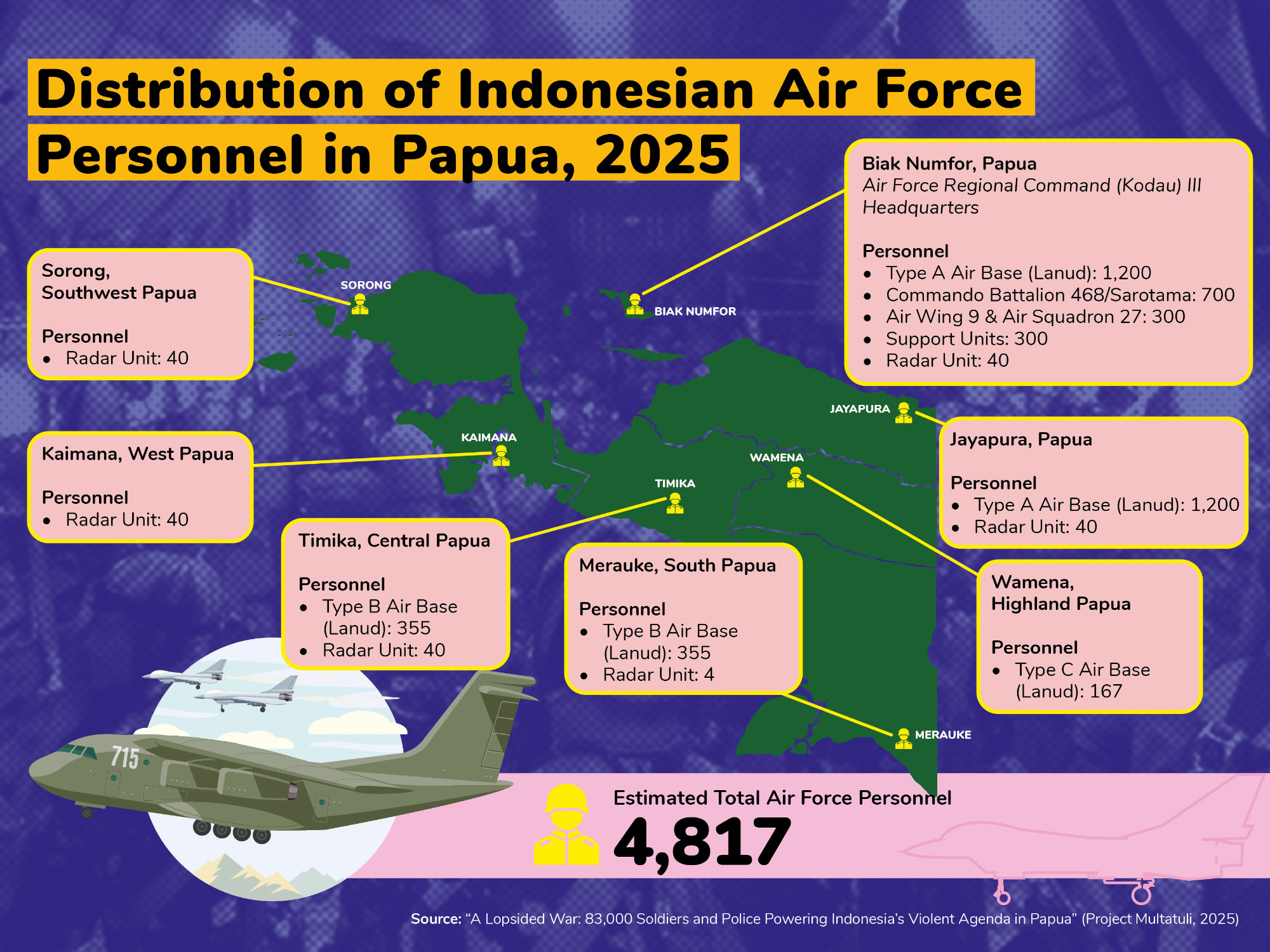
Kodau III’s headquarters in Biak Numfor hosts the largest concentration of Air Force personnel. Based on our calculations, at least 2,500 personnel are stationed there.
Personnel numbers at other locations depend on base type and whether a Satrad is present. Type A Lanud typically have about 1,200 personnel, while Type B and Type C bases have 355 and 167 personnel, respectively. Each Satrad operates with around 40 personnel, including radar technicians and security forces.
Taken together, our conservative estimate puts the number of Air Force personnel in Papua at a minimum of 4,817. This figure could rise as additional military units are established under Prabowo’s administration.
Navy
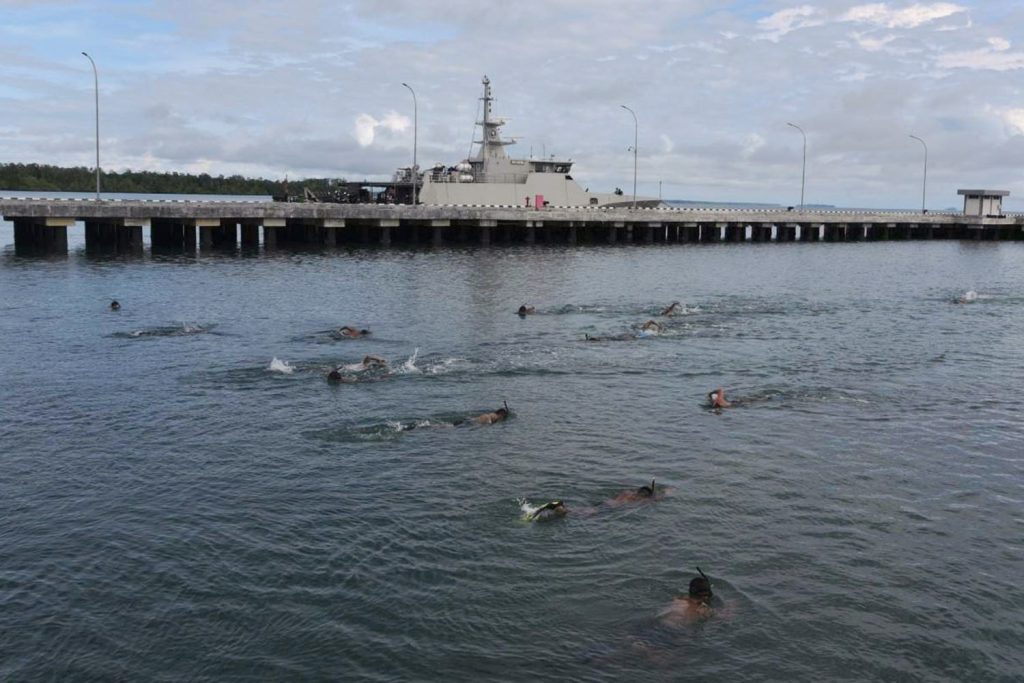
The Navy maintains Fleet Command (Koarmada) III, which oversees maritime defense in eastern Indonesia. Its headquarters is in Sorong.
Prabowo Subianto’s administration is reorganizing the Navy to give it a structure similar to the Army’s. As a result, each Koarmada now has a Naval Regional Command (Kodaeral), an arrangement akin to the Army’s Regional Military Commands (Kodam). Put simply, Kodaeral is a maritime version of a Kodam.
Under this structure, Kodaeral oversees Naval Military Resort Commands (Korem Laut), which in turn manage several Navy Main Bases (Lantamal) and Navy Bases (Lanal). At the lowest level are Maritime Potential Development NCOs (Babinpotmar), the Navy’s equivalent of the Army’s Village Development NCOs (Babinsa).
Koarmada III now controls three Kodaeral: Kodaeral X in Jayapura, Kodaeral XI in Merauke, and Kodaeral XIV in Sorong. Under them are several Lanal and smaller units, including Navy Posts (Posal) and Marine Posts (Posmar).
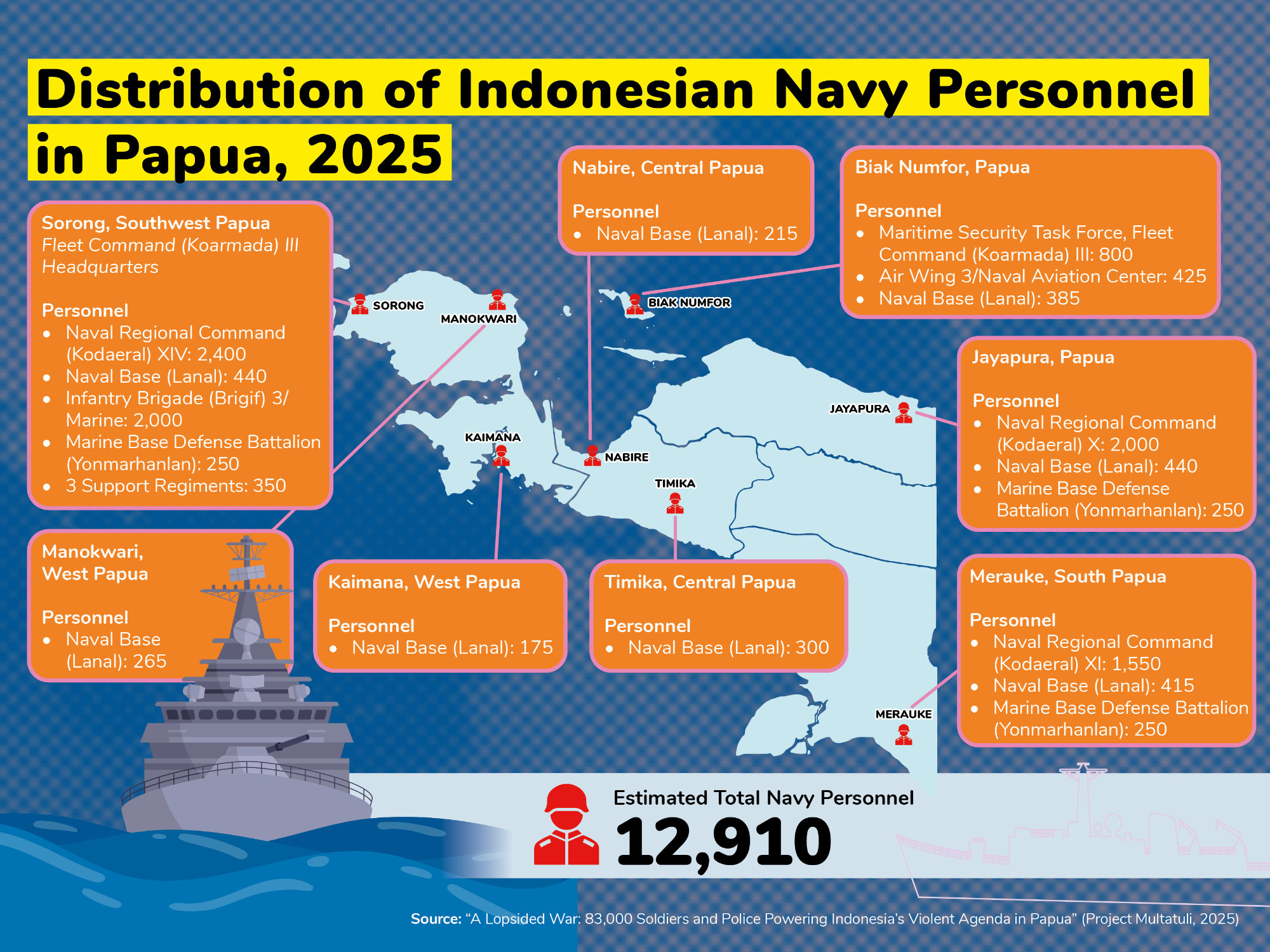
We estimated Navy personnel across eight regions in Papua, including staff at Kodaeral and Lanal headquarters and at combat units such as Infantry Brigade (Brigif) 3/Marine and Marine Base Defense Battalions (Yonmarhanlan).
Sorong, home to Koarmada III and Kodaeral XIV headquarters, hosts at least 5,440 personnel. Jayapura and Merauke, hosting Kodaeral X and XI respectively, station 2,690 and 2,215 personnel.
Overall, there are at least 12,910 Navy personnel in Papua. Once again, this is a highly conservative estimate, and the figure is likely to grow as new Lanal and Posal are built under the government’s expansion plans.
Army
Army personnel represent the largest contingent, totaling 38,790 soldiers, or 68.6% of all organic TNI personnel in Papua.
We have broken down the data by territorial units and combat forces.
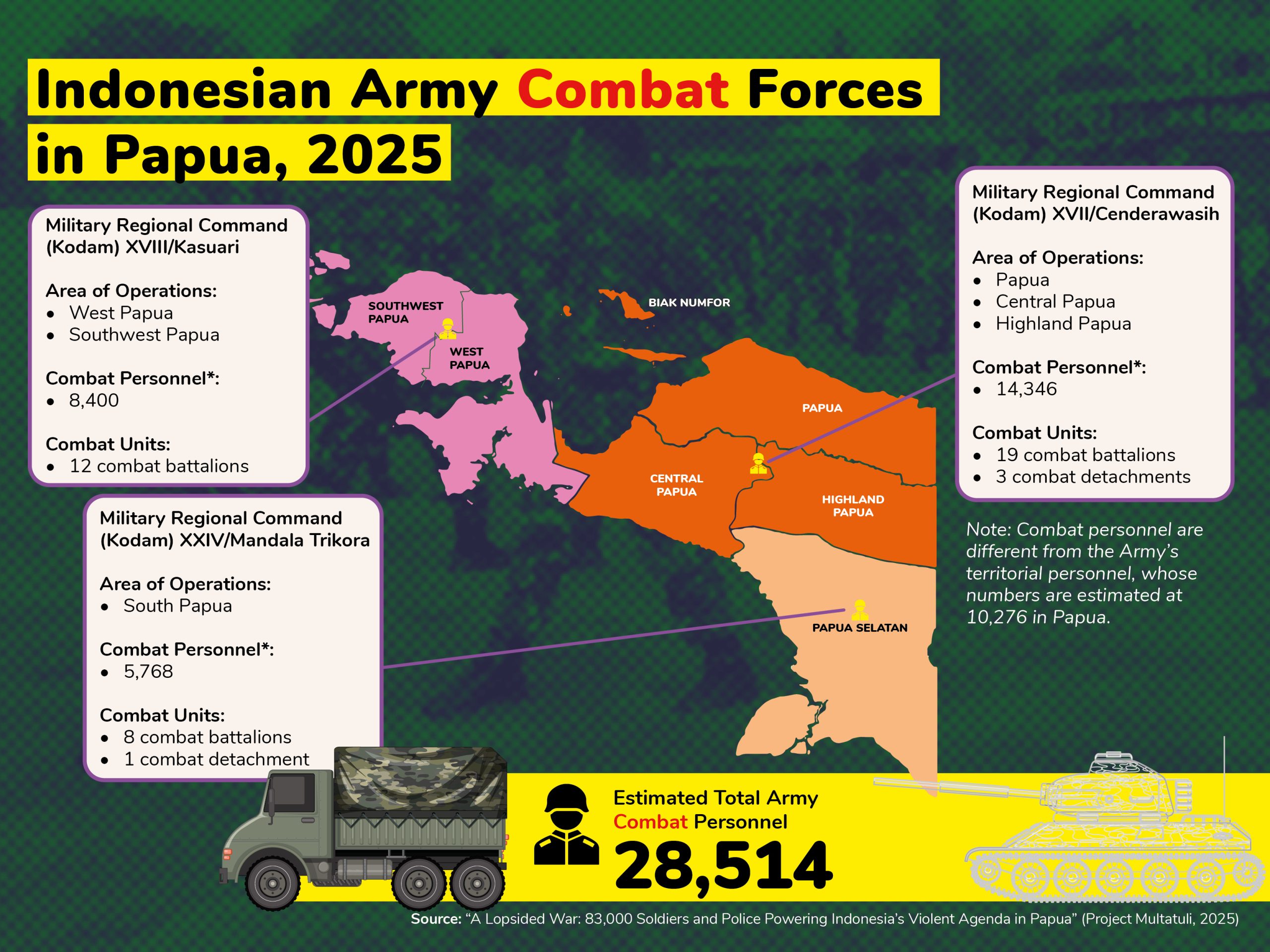
Territorially, the Army divides Papua into three Military Regional Commands (Kodam): Kodam XVII/Cenderawasih in Jayapura, Kodam XVIII/Kasuari in Manokwari, and Kodam XXIV/Mandala Trikora in Merauke.
In 2026, the government plans to establish two new Kodam, one in Nabire, Central Papua, and the other in Sorong, Southwest Papua.
Each Kodam oversees varying numbers of Military Resort Commands (Korem). Kodam XVII/Cenderawasih has three, Kodam XVIII/Kasuari has two, and Kodam XXIV/Mandala Trikora has one.
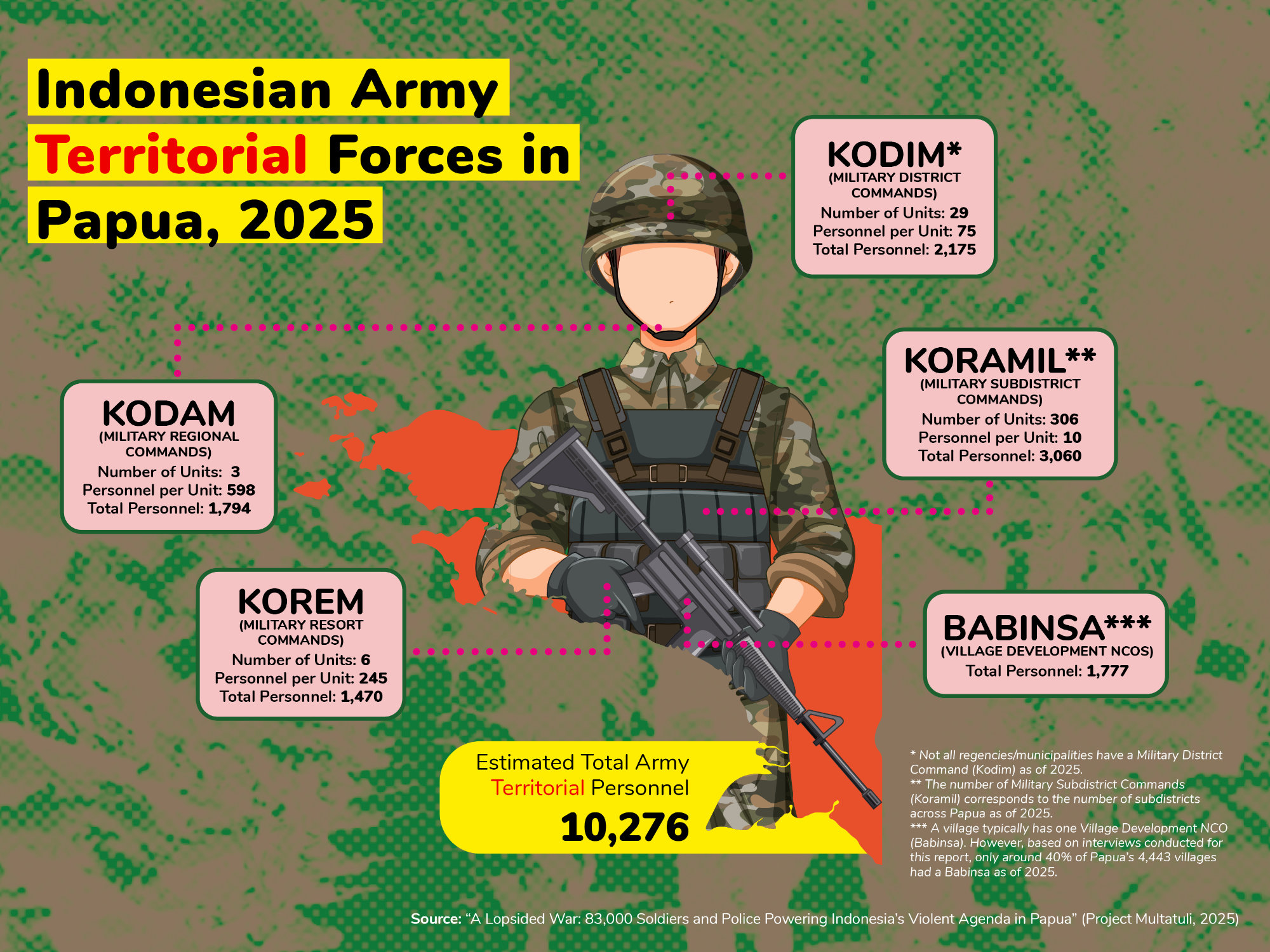
Each Korem oversees Military District Commands (Kodim). Papua has 29 Kodim, short of the ideal, as each regency and city is expected to have one. Papua has 40 regencies and two cities.
Each Kodim oversees Military Subdistrict Commands (Koramil). The number of Koramil corresponds to the number of subdistricts. As of 2025, Papua has 306 subdistricts.
Meanwhile, each village is meant to have a Village Development NCO (Babinsa). Papua has 4,443 villages. Interviews for this report suggest that, as of 2025, only about 40% of those villages had a Babinsa.
We have analyzed territorial Army personnel across Papua. This figure excludes the two Kodam that officials plan to establish in 2026.
The Army maintains “organic” combat forces, meaning personnel assigned to Papua-based units. Some battalions fall under Kodam and Korem, while others are under the Army Strategic Reserve Command (Kostrad) or the Army Special Forces Command (Kopassus).
Kodam XVII/Cenderawasih operates across three provinces: Papua, Highland Papua, and Central Papua. The military is restructuring this command.
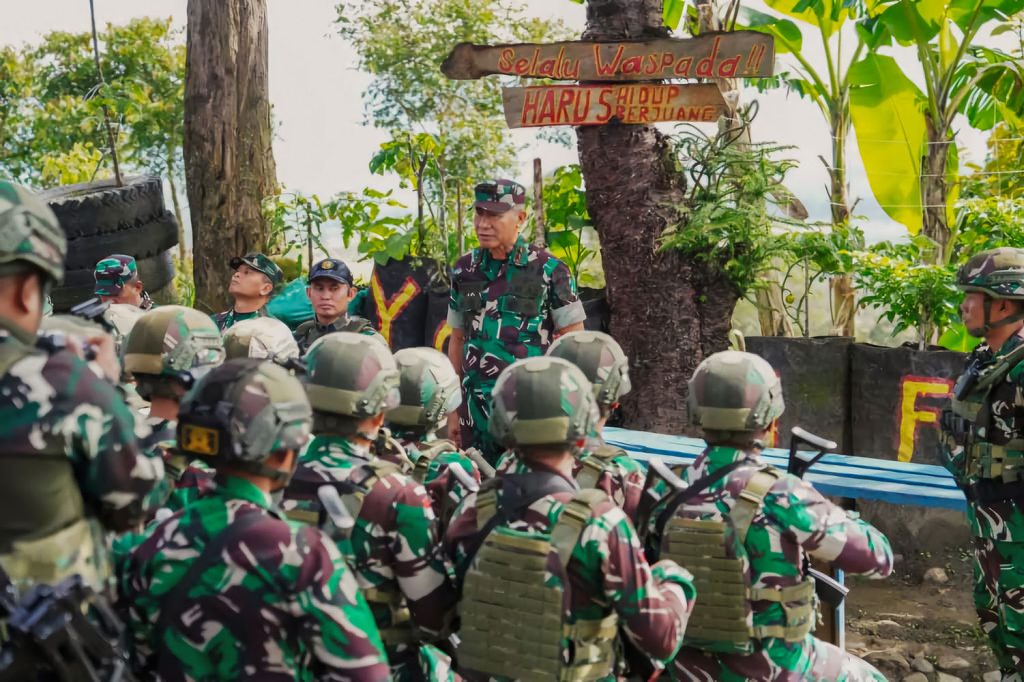
The military plans to establish a Kodam for Central Papua in 2026. Korem 173/PVB, formerly based in Biak Numfor, has moved to Nabire in Central Papua to serve as the nucleus of the new command.
It will relocate Infantry Brigade (Brigif) 20/IJK from Timika to Nabire to support the Central Papua Kodam.
Brigif 20/IJK comprises two Infantry Battalions (Yonif): Yonif Raider 754/ENK in Timika and Yonif Raider 755/Yalet in Merauke. This brigade operates under Infantry Division 3/Kostrad.
Jayapura hosts Yonif 751/VJS, Combat Engineer Detachment (Denzipur) 10/KYD, and Denzipur 12/OHH. The city also houses a Kodam Training Regiment (Rindam), which provides education and training.
Moreover, the military has reinforced Kodam XVII/Cenderawasih with units designated for “territorial development” (“teritorial pembangunan” in Indonesian, or TP). These units are intended to strengthen defense while also supporting development and agriculture.
For example, Brigif TP 80/Kurare and Brigif TP 82/WKB each command five Territorial Development Infantry Battalions (Yonif TP).
Yonif TP 815/WGT is based in Keerom under Korem 172/PWY. Another Yonif TP is reported to operate in Paniai, although its unit designation remains unclear—the Defense Ministry listed it in its 2025 planning documents.
A typical Army battalion has 700 personnel, divided into three or four rifle companies and a headquarters company. TP battalions are similar in size, but instead of rifle companies they include agriculture, animal husbandry, fisheries, and health companies.
In total, two Brigif TP and 12 Yonif TP serve under Kodam XVII/Cenderawasih.
In addition, Joint Defense Area Command (Kogabwilhan) III is headquartered in Mimika, home to PT Freeport Indonesia’s mining operations. It serves a combat coordination role. Mimika is also set to become the base for Kopassus Group 6, with three battalions to be redeployed from Jakarta.
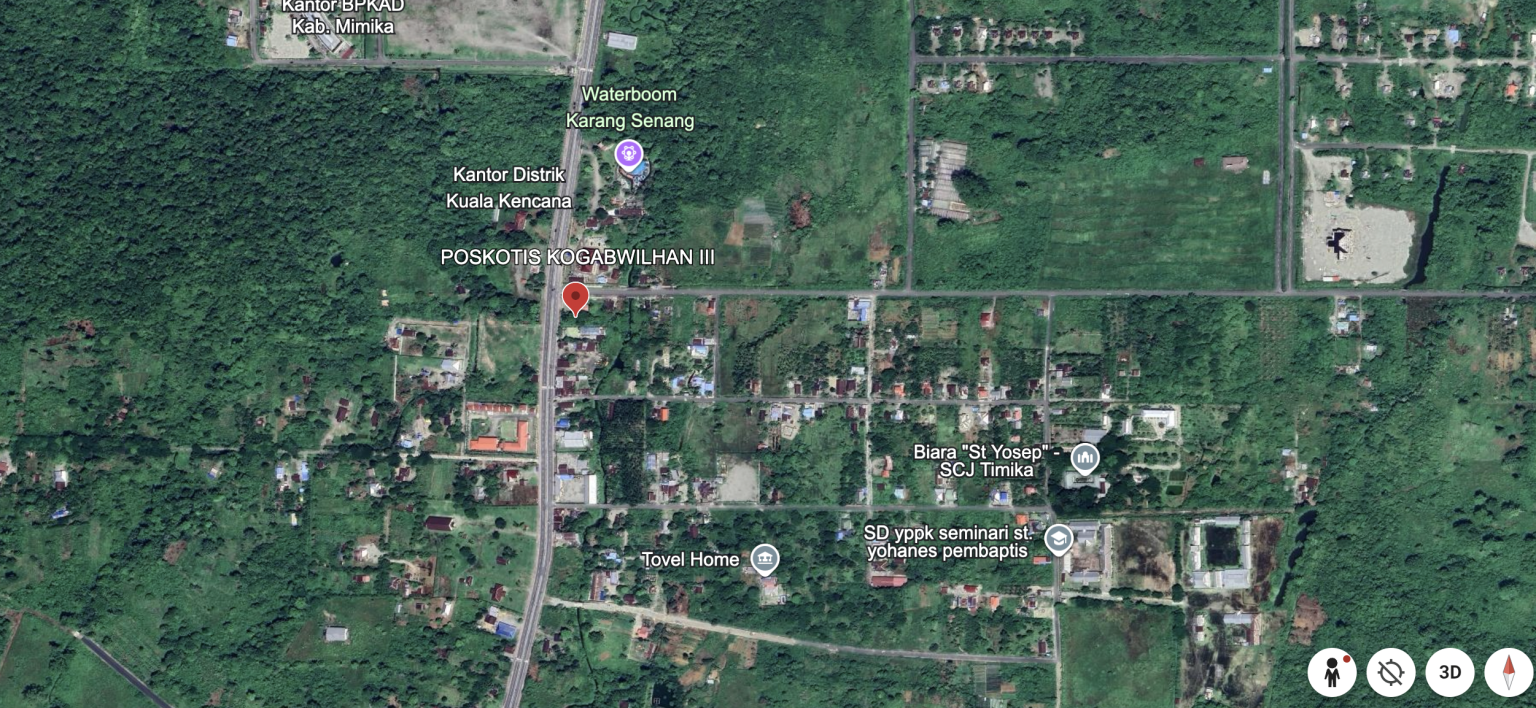
Overall, Kodam XVII/Cenderawasih hosts 19 combat battalions and three combat detachments. A typical battalion has 700 personnel, while a detachment has 168. A Kogabwilhan headquarters is typically staffed by 542 personnel.
Under our moderate estimate, there are a total of 14,346 combat personnel in the Kodam XVII/Cenderawasih area.
Meanwhile, Kodam XVIII/Kasuari was formed in 2016 after being split off from Kodam XVII/Cenderawasih. Headquartered in Manokwari, it covers West Papua and Southwest Papua.
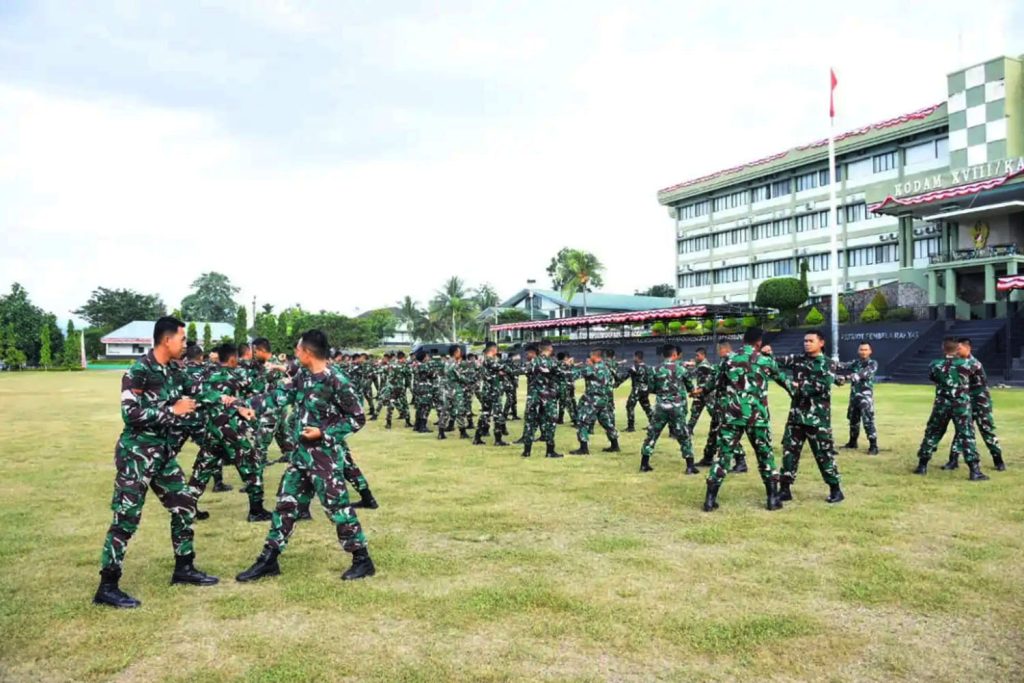
This Kodam fields Yonif 761/KA and Combat Engineer Battalion (Yon Zipur) 20/PPA, as well as Brigif 26/GP with three Yonif units: Yonif 762/VYS, Yonif 763/SBA, and Yonif 764/LB.
Korem 181/PVT in Sorong has one TP battalion, Yonif TP 863/BB, while Korem 182/JO in Fakfak has Yonif TP 808/MM. Five additional Yonif TP operate under Brigif TP 84/UA in South Manokwari.
Overall, Kodam XVIII/Kasuari has 12 combat battalions. Seven are Yonif TP units formed in 2025, bringing the estimated number of combat personnel under this command to about 8,400.
While the figure is smaller than that for Kodam XVII/Cenderawasih, the Kodam XVIII/Kasuari area also includes the Navy Fleet Command (Koarmada) III headquarters.
In 2026, the military plans to establish a new Kodam in Southwest Papua by splitting it off from Kodam XVIII/Kasuari.
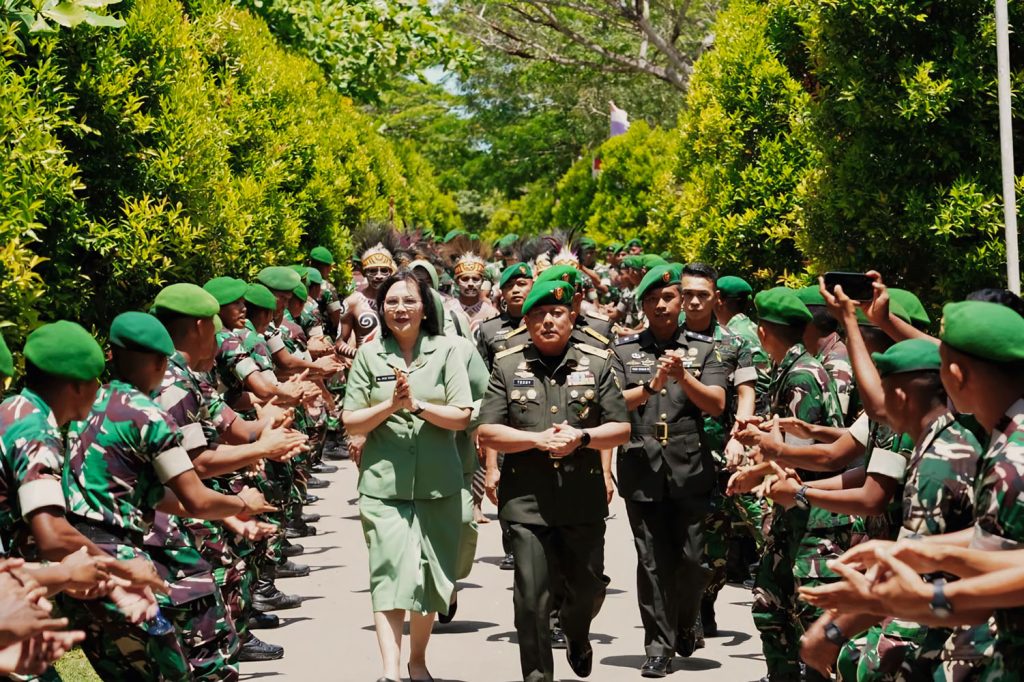
Kodam XXIV/Mandala Trikora is the newest military command in Papua, created by upgrading Korem 174/ATW in Merauke. President Prabowo Subianto announced its establishment on Oct. 10, 2025.
Kodam XXIV/Mandala Trikora covers all of South Papua. It has three Kodim, in Merauke, Boven Digoel, and Mappi. The military plans to establish a fourth in Asmat.
This Kodam includes Yonif 757/GV and Denzipur 11/MA. Its largest combat unit, Brigif TP 83/Bugodi, commands six Yonif TP. The military also plans to establish Yonif TP 861 in Wanam Village, the site of the Prabowo administration’s food and energy estate.
In early October 2024, near the end of his term as defense minister, Prabowo established five Vulnerable Area Support Infantry Battalions (Yonif PDR) in Papua, including two in South Papua. The units were created to support and oversee government programs in the region.
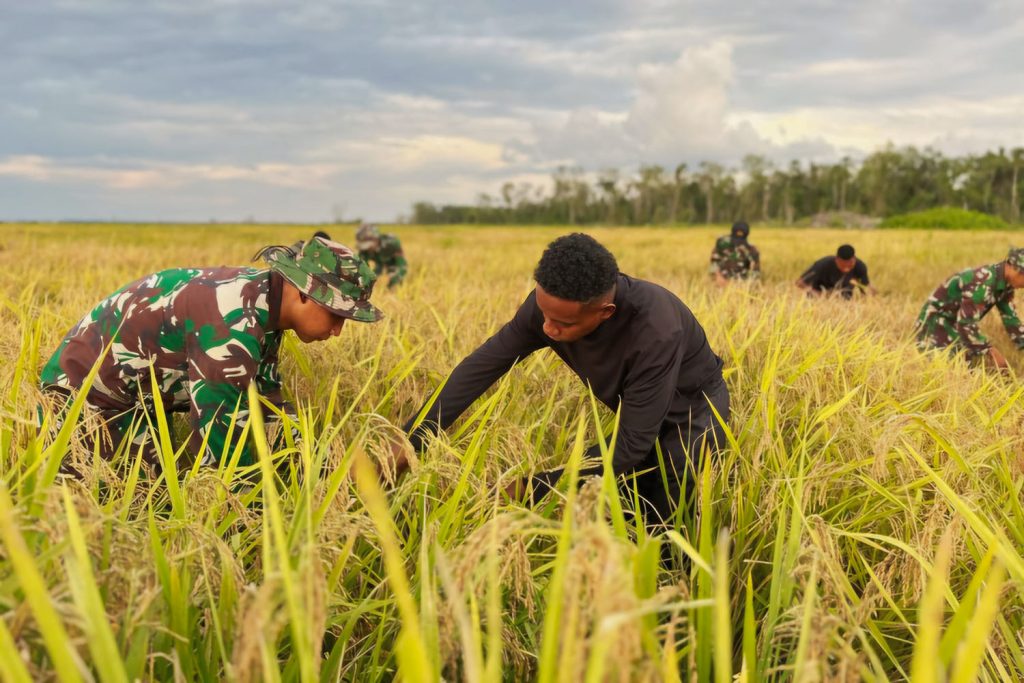
In early December 2024, after Prabowo became president, the military redesignated all Yonif PDR as Yonif TP.
Soldiers from these TP battalions are now clearing land for the Merauke food and energy estate, planned to cover 2.6 million hectares. Of that total, 1 million hectares is slated for sugarcane plantations and bioethanol factories. As a result, Papuan customary land and forests continue to shrink.
Overall, Kodam XXIV/Mandala Trikora has eight Yonif battalions and one Denzipur. By our moderate estimate, this Kodam has 5,768 combat personnel.
We sought confirmation from Maj. Gen. Freddy Ardianzah, a TNI spokesperson. We asked about the number of “organic” troops stationed in Papua, the personnel figures we identified, and the rationale for establishing new units in Papua. We sent these questions on Dec. 3, 2025, but had received no response by the time of publication.
Police
At present, Papua has two provincial police commands (Polda): Papua Regional Police and West Papua Regional Police. Although Papua was split into six provinces in 2022, four new Polda have yet to be established.
Papua Regional Police now covers four provinces: Papua, South Papua, Central Papua, and Highland Papua. Meanwhile, West Papua Regional Police covers two: West Papua and Southwest Papua.
According to a report by Jubi, a local media outlet in Jayapura, Papua Regional Police currently has 15,854 personnel. By the police’s own calculations, that figure falls well short of the staffing level they consider ideal, which is 28,848 personnel.
Meanwhile, West Papua Regional Police has 8,343 personnel, even though its ideal staffing level is 15,392.
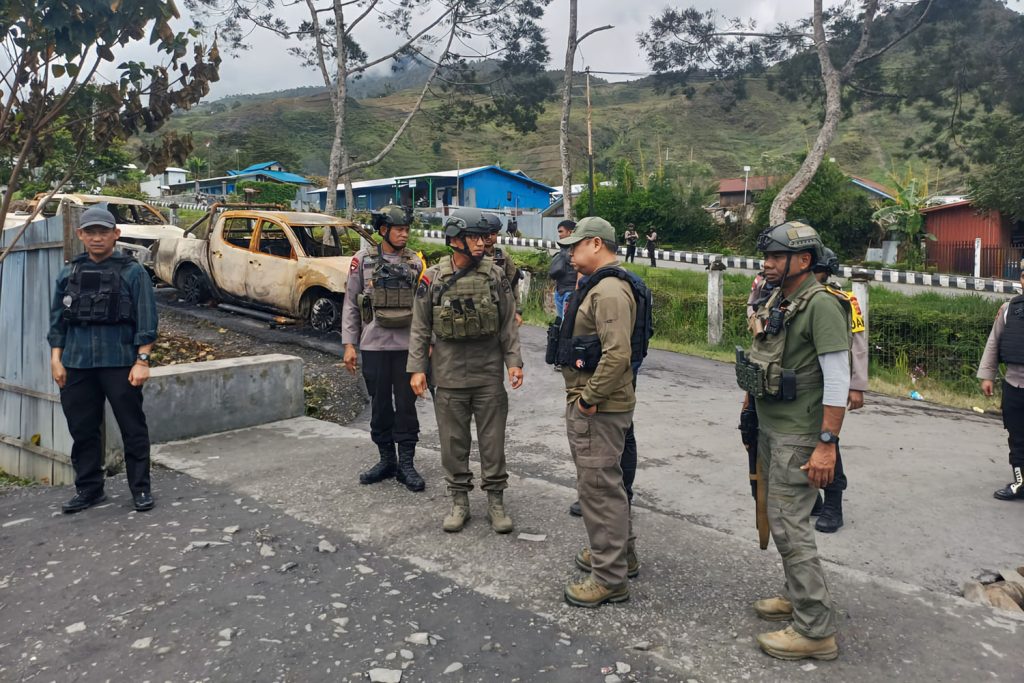
The police also conduct security operations through the Mobile Brigade (Brimob). Each provincial police command typically fields one Brimob battalion.
Brimob forces are essentially combat units, with specialized training in urban security and urban warfare. Brimob also has Gegana units that specialize in counterterrorism, bomb disposal, and crowd control.
Papua Regional Police currently fields two Brimob battalions and one Gegana detachment, totaling 2,063 personnel. The police plan to add two more battalions: one in Wamena, Highland Papua, and one in Biak Numfor, Papua.
Meanwhile, West Papua Regional Police inaugurated its Brimob unit in June 2025 with 400 personnel.
A War with No Victor
Given the scale and distribution of military and police personnel across Papua today, a host of questions arise.
What is driving this massive military expansion, and to what end? Does Indonesia really need such a large force for so-called security and development? How much money is the government spending on it? And most importantly, with such a large security presence, why has Indonesia still been unable to resolve the separatism issue in Papua?
We will try to answer these questions one by one in our reporting series on #PrabowosWarRegime in Papua, beginning with this article.
A hint: Timor-Leste.
In 1975, the New Order government created a conflict of its own by invading Timor-Leste, then known as East Timor. Indonesia’s occupation did not end until 1999, after the people of Timor-Leste held a referendum and voted to separate from Indonesia.
Over more than 23 years in Timor-Leste, thousands of Indonesian soldiers were killed in combat. Tens of trillions of rupiah, or hundreds of trillions in today’s value, were spent to subdue the territory, rebuild it, and install a puppet government.
A series of military operations was launched to crush resistance in Timor-Leste. An estimated 20% of the population died during the occupation, largely from hunger, illness, and other fallout from Indonesian military operations.
Yet the Timorese resistance never died. Movement leaders who survived gunfire or arrest kept fighting, and went on to inspire a new generation.
Indonesia never fully conquered Timor-Leste, despite its overwhelming superiority in training, weaponry, and other military capabilities.
In the end, Indonesia gained nothing. Only loss and death.
Made Supriatma is a Visiting Fellow at the ISEAS-Yusof Ishak Institute in Singapore, and an Early Warning Fellow at the Simon-Skjodt Center for the Prevention of Genocide at the United States Holocaust Memorial Museum.
Fahri Salam is editor-in-chief of Project Multatuli.
Johanes Hutabarat contributed to this article.
Anne Parisianne translated the original Indonesian piece, and Viriya Singgih edited the English version.
This is the first article in our #PrabowosWarRegime reporting series. The series exposes how Indonesia’s war machine is being deployed in Papua, fueling a climate of fear, killings, dehumanization, and waves of displacement that have forced indigenous Papuans to flee their own land.