

Colonial rule, missionary campaigns, and post-independence Indonesian policies suppressed Arat Sabulungan, the Mentawai belief system in which tattoos are sacred links to nature, spirits, and community. The crackdown nearly erased the tradition. In recent years, however, Mentawai’s next generation has begun reviving it.
“If the elders get to heaven by doing good deeds, hopefully I’ll still make it to heaven with tattoos, too.”
I followed Bajak Letcu and his two friends, Frenky Andi and Ruslan Sapolenggu, as they searched for kelak baga trees in a forest about 400 meters behind Letcu’s tattoo workshop in Tuapeijat, the capital of the Mentawai Islands Regency in Indonesia’s West Sumatra.
Large meranti, katuka, keruing, and tumung trees rose into the canopy, while the much smaller kelak baga trees grew scattered in their shade.
Sipatiti, traditional Mentawai tattoo artists, use kelak baga wood to make their tattooing tools. They craft the hard, strong wood into needles and hammers called lilipat patitik.
Letcu is the youngest sipatiti in Mentawai. That day, he was determined to show the complete process of creating a Mentawai tattoo, starting with the search for kelak baga wood.
After spotting a suitable tree, he pushed through the undergrowth to reach it. The small tree stood about three meters tall, with straight, upward-growing branches and narrow leaves.
Letcu cut it down, stripped off the leaves, and kept a section roughly two meters long.
“This kelak baga wood is so strong that I also use it as a hook to hang large, heavy iron pots in my house,” Frenky said, breaking the silence.
Letcu learned from Teu Ronganga, a traditional tattoo artist in Simatalu Village, that kelak baga is a suitable tree for making tattooing tools. Simatalu is the oldest village on Siberut Island and is believed to be the ancestral home of the Mentawai people. Other woods can also be used for lilipat patitik, including meranti, forest mangosteen, palm trunks, and bamboo.
Frenky and Ruslan, who also work as tattoo artists, chose branches from a large felled meranti tree that appeared to have been cut for construction materials. They selected curved branches for the tattoo needle handles and straight sections around 50 centimeters long for the hammer.
The three then sat on the fallen meranti trunk and worked with their machetes to shape the wood into lilipat patitik.

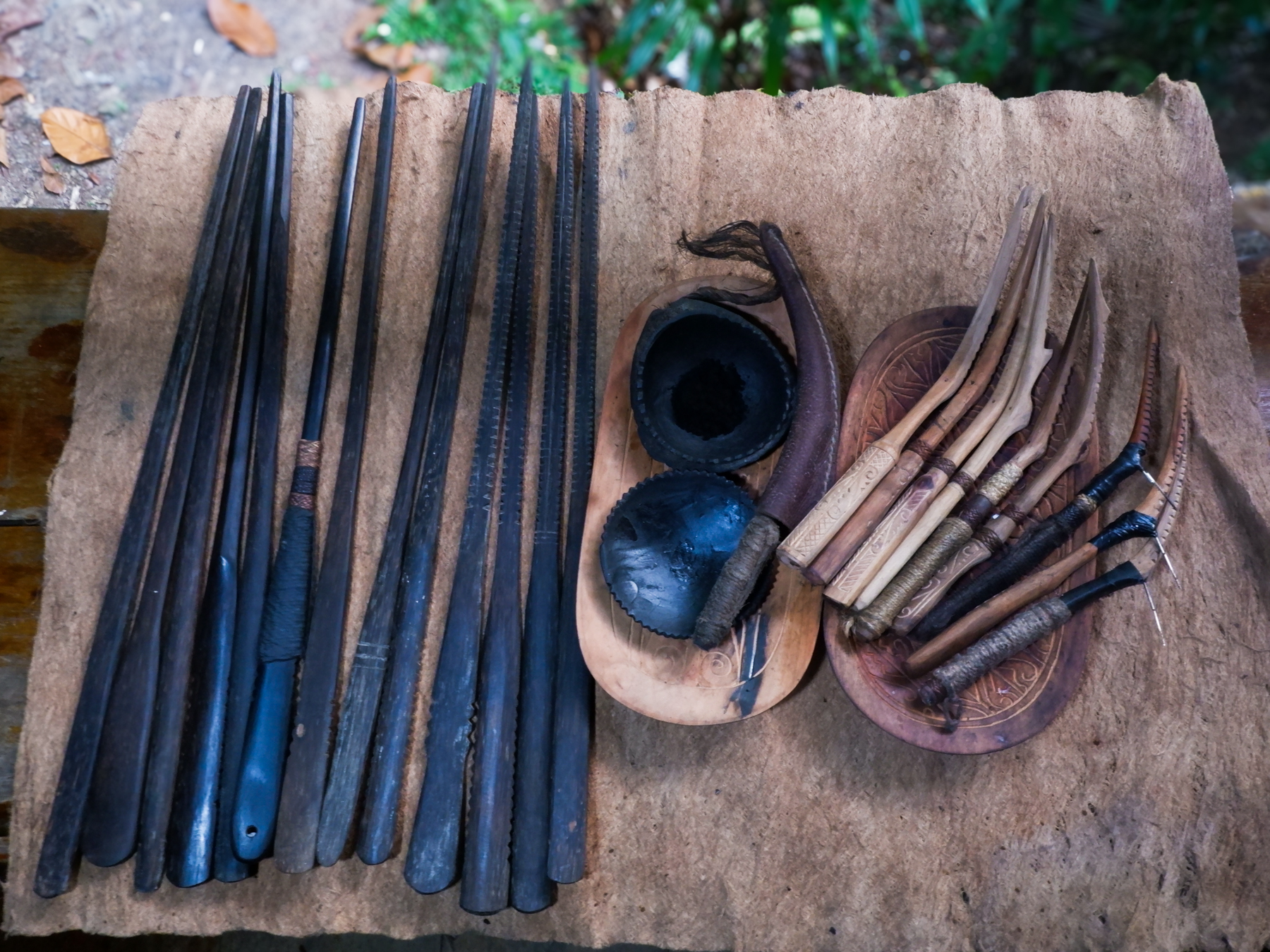
“This isn’t the final work just yet. We need to dry this wood for several days to reduce the moisture, then we re-shape and sand it,” said Letcu, whose real name is Viator Simanri Sakombatu.
***
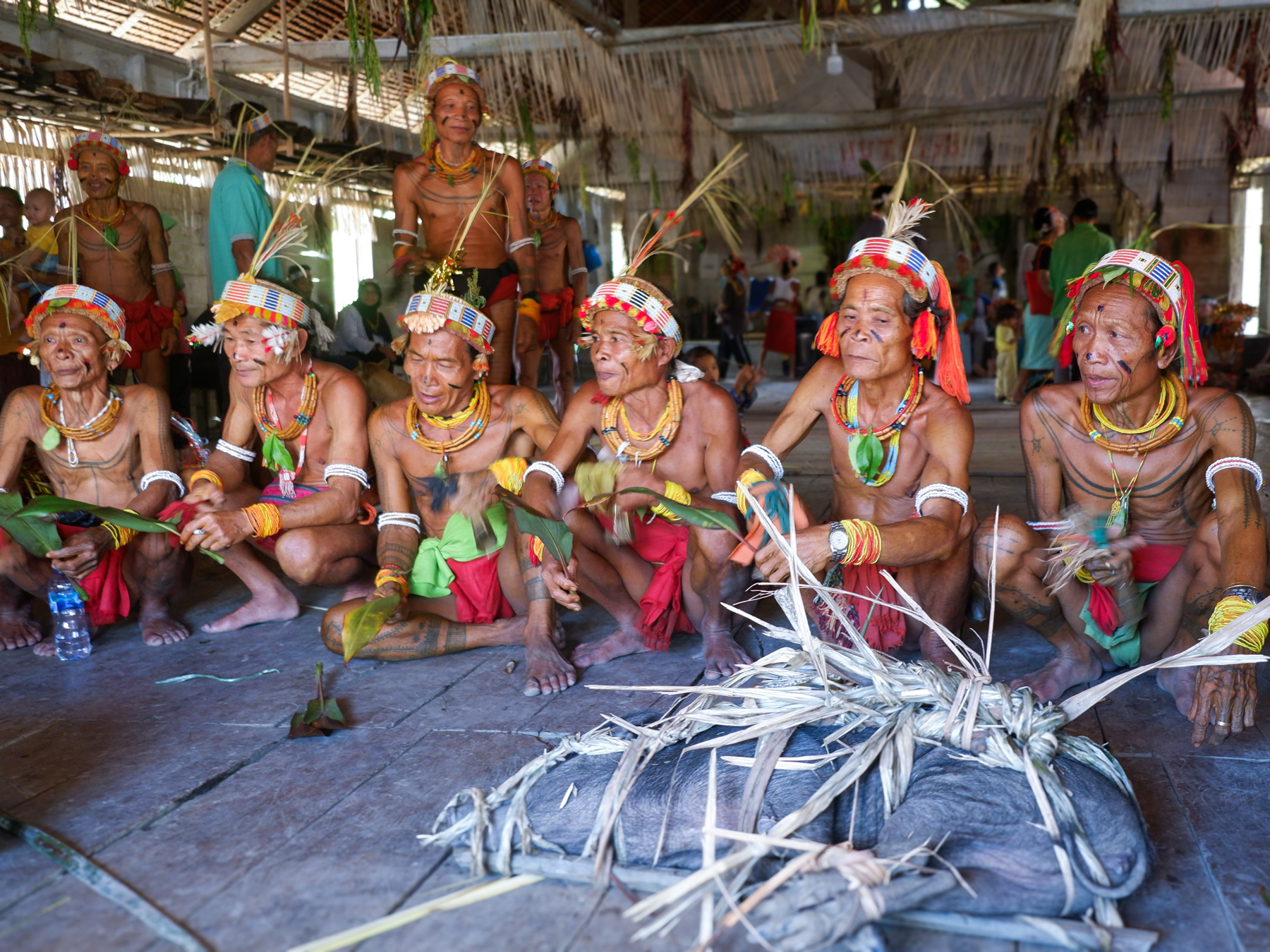
Mentawai-style tattoos, known as ti’ti’, nearly disappeared due to decades of prohibition. In traditional Mentawai culture, tattoos mark the transition from adolescence to adulthood for both men and women.
Before Dutch missionaries introduced Protestant Christianity, tattooing was widespread among Mentawai people across the archipelago’s four main islands: Siberut, Sipora, North Pagai, and South Pagai.
Today, only a handful of older people living in Siberut’s interior still bear them.
Missionaries arrived on the Pagai Islands in 1901 and gradually expanded to the other islands. They campaigned against Arat Sabulungan, the indigenous Mentawai belief system, which they saw as incompatible with Protestant teachings and dismissed as primitive. Tattooing was among the practices they targeted.
In 1954, the Indonesian government formalized these restrictions, banning not only tattooing but also healing rituals led by sikerei (shamans) and other ceremonial practices.
Authorities aggressively enforced the prohibition through the 1990s, often with the involvement of police. Arat Sabulungan, the heart of Mentawai culture, largely disappeared. Only in the rural areas of Siberut Island did remnants of Mentawai culture, including the tattoo tradition, survive.
“Police and Protestant religious leaders strictly forbade tattoos in the past. People who wore Mentawai tattoos, like my uncle, faced punishment,” Letcu said.
In the 1980s, authorities forced his uncle and three other tattooed Mentawai people to repair district roads for three months.
“Meanwhile, the punishment from the Protestant church was called ‘church discipline’, a form of social sanction that ostracized offenders from church activities,” he said.
Letcu was the first young person to become a Mentawai tattoo artist. Previously, only elderly practitioners, typically over 60 in remote Siberut villages, possessed this knowledge. Their numbers were dwindling as they aged and died, with few young people interested in learning the craft.
He first learned about tattoos from his uncle, Ta Endei Romek Sakombatu, in 2012, when he was still living in Pokai, North Siberut.
“I was very interested in the tattoos on my uncle’s body. Only he still had tattoos, while my parents never had any tattoos,” Letcu said.
The ban on Mentawai cultural practices ended in the Reform Era, when the Mentawai Islands became an official regency in 1999. Yet many schools still prohibit students from having tattoos, effectively limiting them to children who drop out. Parents, too, often forbid tattoos, fearing their children will be turned away by schools.
As a result, on Siberut Island, the last bastion of Mentawai culture, only the sikerei wore tattoos.
“I’m interested in Mentawai-style tattoos because it frustrates me that, on the one hand, the Mentawai Islands government promotes the unique tattoo style to the world, but on the other hand, they don’t actually preserve Mentawai tattoos, and even the media says Mentawai tattoos are nearly extinct,” Letcu said.
After his uncle died in 2015, Letcu continued learning with Teu Ronganga, an elderly sikerei and renowned tattoo artist living in Simatalu, West Siberut.
From him, he learned tattooing techniques, how to design motifs, how to make the tools, and the meanings behind the tattoo rituals.
“But because he was already old and no longer tattooing, I tattooed my own leg to practice the method and feel the pain of different needles, from orange thorns to sharpened karai wood and wire. All of them hurt terribly,” Letcu said.
Learning from his own experience, Letcu ultimately chose modern tattoo needles, which are less painful and are more hygienic.
In 2016, he began tattooing his friends, young Mentawai people in Tuapeijat, with traditional styles. He also visited old Mentawai villages in Simatalu, West Siberut, where the tattoo culture remained strong but the sipatiti could no longer work due to age. Residents there trusted him to tattoo them.
Since then, Letcu has gained recognition as a young traditional Mentawai tattoo artist. He has tattooed many people, including 56 people with the durukat motif, the largest authentic Mentawai tattoo design, on their chests. His clients now include not only Mentawai people seeking to revive pride in their identity, but also foreign tourists.
“Now many Mentawai people are once again wearing Mentawai tattoos; government employees, students, and young people. They’re starting to take pride in having tattoos,” Letcu said.
The Crab That Pinches the Neck
Toward midday, we left the forest and made our way back up the steep path, climbing toward Bajak Letcu’s Tattoo Studio. That afternoon, Letcu was scheduled to tattoo a young Mentawai man.
He was already waiting for us on the steps of the studio, which resembled a traditional Mentawai house. His name was Rully Puja Santiago. Wearing Levi’s denim shorts, he had already taken off his shirt and hung it neatly on the stairs.
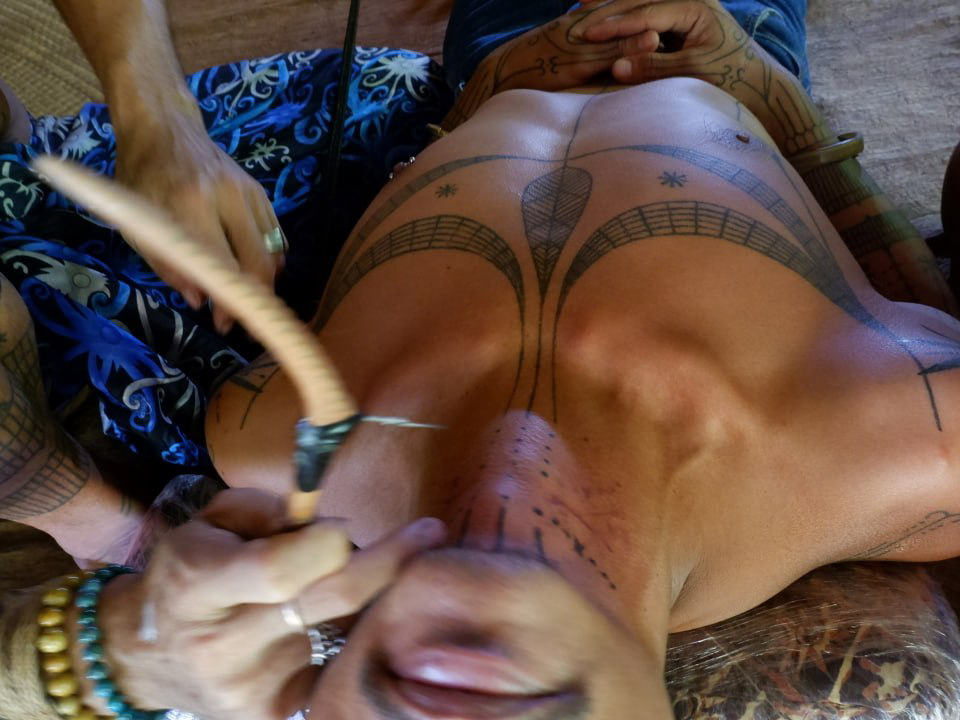
On his chest was the ti’ti’ gegebak (chest tattoo) from Simatalu. Curved lines followed the shape of his chest, with an alepet leaf design at the center. Both Simatalu and South Siberut have chest-tattoo traditions, but the alepet motif is unique to Simatalu.
He wore modern-style shorts, yet with his tattoos and a luat headband, he looked like a young Mentawai man from the past—as if he had stepped out of anthropologist Reimar Schefold’s book and appeared before me.
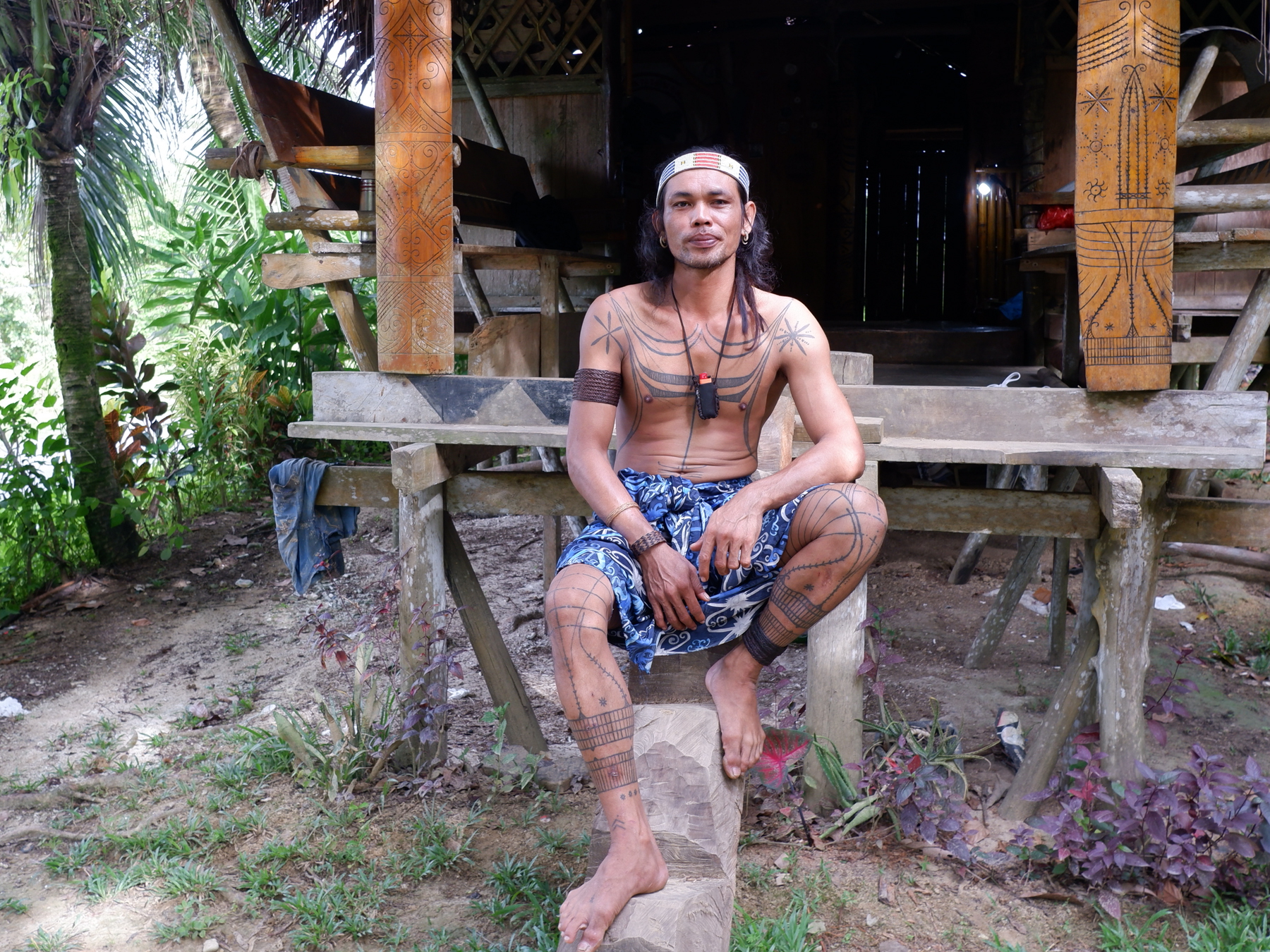
Mentawai tattoos covered his entire body. On both shoulders were langsat-peel motifs, shaped like blooming stars. His arms carried rattan-thorn designs, and his wrists and ankles bore the ti’ti’ simumurat pattern.
Horizontal lines decorated his thighs, while a ti’ti’ salio motif (a fence-like pattern of curved rattan thorns) ran from his knees to his calves. Scattered among them were small matatsulu, or sun tattoos.
On his back was the traditional ti’ti’ gigirat, with straight lines running along the spine and curved lines radiating from the shoulders.
I wondered what other tattoos he wanted to add.
“I want to tattoo my neck, near the throat, like the tattoos of people in Simatalu,” he said.
Puja said his grandfather came from Simalegi, a village near Simatalu in West Siberut. That was why he chose many Simatalu tattoo motifs, which are identical to those found in Simalegi.
Letcu began preparing his equipment. He went behind the workshop to gather leaves and prepare the lilipat patitik and tattoo ink. There, he performed a brief ritual with the leaves before the tattooing ceremony. We did not witness it.
“That’s my ritual with the ancestors, asking permission so everything goes smoothly. Not everything needs to be seen by others,” he said, explaining why he performed it in private.
The ritual used several leaves, including alepet and boblo, which shamans often use in healing ceremonies.
Then, the tattooing session began. Puja stood with his head tilted upward while Letcu sketched the ti’ti’ labi pakatoili, the crab-claw motif, onto his neck using a red marker.
After finishing the design, Letcu told Puja to lie flat on a pandan mat without a pillow. Letcu held the lilipat patitik in his right hand, a needle mounted at its center, while his left hand gripped a 50-centimeter wooden stick used to tap it.
On the floor beside him sat black ink (a mixture of water and lamp soot) in a coconut shell.
He dipped the needle tip into the ink, then tapped the wooden stick against the lilipat patitik, gently driving the needle into Puja’s neck along the drawn lines.
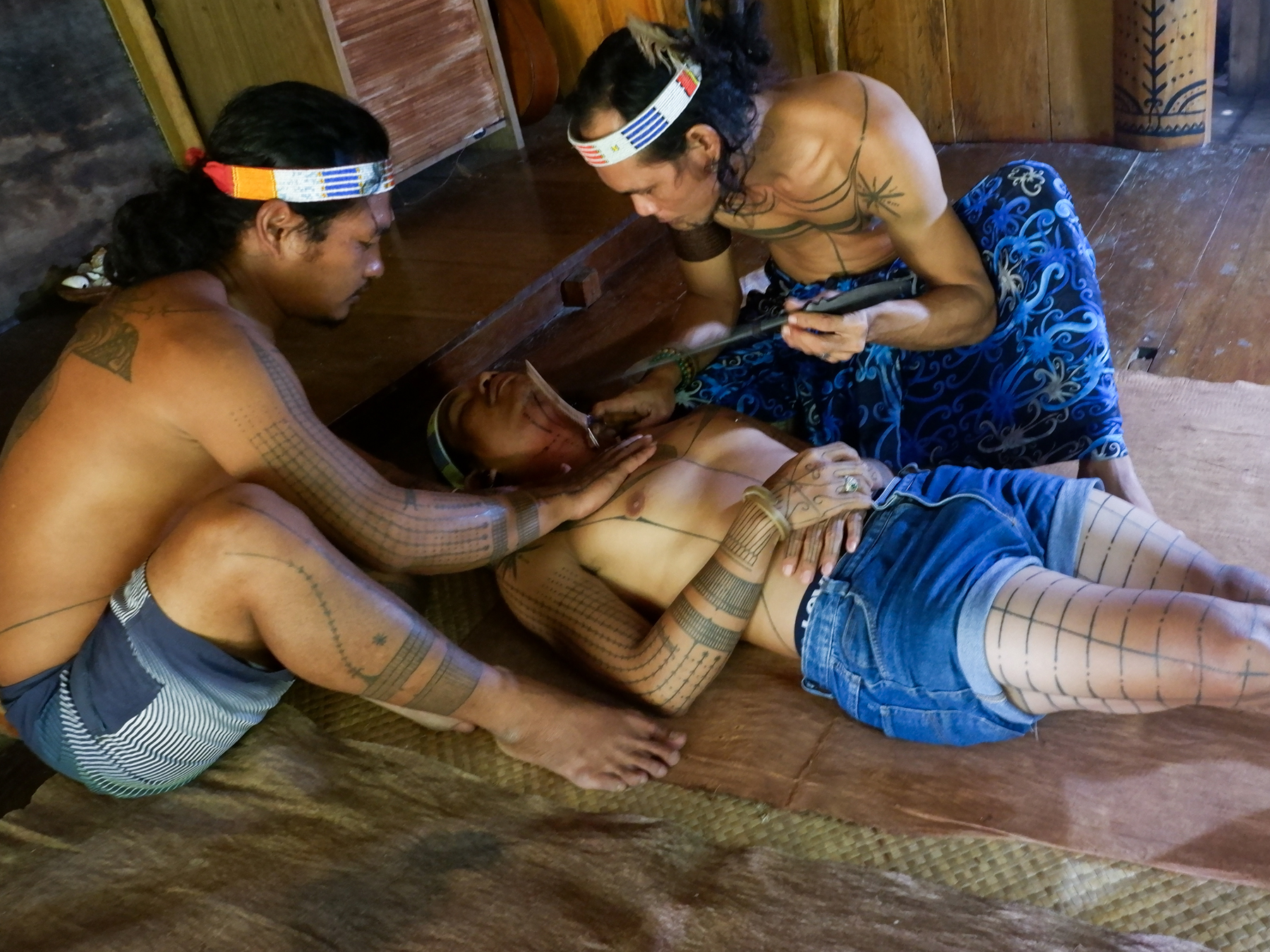
“Tock! Tock! Tock!” The rhythmic tapping of the lilipat patitik echoed through the room. Each needle strike left reddish-black lines on Puja’s skin. Ruslan Sapolenggu, assisting Letcu, held Puja’s shoulders and chest to keep him still.
Puja grimaced and stared at the trees outside the window. He endured the pain until Letcu finished the tattoo, a process that took about 30 minutes.
“Now you have a complete set of Mentawai tattoos,” Letcu said, looking with satisfaction at his work on Puja’s skin. Most of Puja’s tattoos were his own creations.
Puja looked into a small mirror, checking his new tattoo. He looked satisfied. The skin showed no swelling or bleeding.
“It felt like being sliced with a box cutter. Neck tattoos are among the most painful, besides the tailbone and back of the thighs,” Puja said.
Tattoos and Symbols of Resistance
Puja’s decision to get full-body tattoos came with consequences, including rejection from his family. He said he got his first tattoos in 2016, when he was still a contract worker at the Mentawai Islands Regency Government Office in Tuapeijat.
He started with tattoos on both ankles, done by Letcu, Frenky, and Reynold.
“My extended family was very angry, even though I told them these were cultural tattoos. Why shouldn’t they be allowed? My grandfather was also tattooed. He was even punished by the government because of his tattoos,” said Puja, who comes from a Muslim family.
“My mother even said, ‘If you add more tattoos, you have to make your own family card,’” he added.
In Indonesia, the family card is an official document listing all household members. By telling him to make his own, his mother was essentially disowning him.
“Eventually I left home and kept adding tattoos, because over time, I fell more and more in love with Mentawai tattoos, the cultural heritage from my ancestors.”
Puja has quit his job as a government contract worker and now works as a surf and diving guide for foreign tourists visiting Sipora Island.
“Hopefully my mother and family understand my choice to have tattoos. If we don’t get them, how can we save Mentawai tattoos from extinction?” he said.
Meanwhile, Ruslan Sapolenggu, Letcu’s assistant, shared a similar story of family rejection. Nearly all of the 31-year-old’s body was covered in traditional tattoos, with only his thighs still bare. He began getting tattooed at Letcu’s studio in 2022.
“My first tattoo was on my chest. When my mother found out, she was furious. She wouldn’t talk to me for two weeks,” Ruslan said.
He was from Sigapokna Village in West Siberut. His grandfathers were sikerei (shamans), and all of his grandparents had complete Mentawai tattoos. But after the government prohibited the practice, no one from his parents’ generation, or his own, had gotten tattoos.
“Now I’m the only one from Sigapokna with Mentawai tattoos,” he said.
Authorities once punished his maternal grandfather, Tepalaga, for having tattoos, Ruslan said.
“Police came to our village and took tattooed people to Sikabaluan, the North Siberut district capital. The police ordered these people to clean the roads for a week. That was their punishment,” Ruslan said.
Police would also come to the village brandishing pistols to intimidate residents. They checked for people who still wore kabit (loincloths made from tree bark), performed cultural rituals, and got tattoos.
“I heard from the village elders that once the police arrived by boat, firing pistols into the air [before they reached the shore]. At that time, residents were working together to build a church. A ricochet hit a resident’s shoulder, injuring him,” he said.
The history of prohibition actually motivated Ruslan to get tattooed, and in time, his mother came around.
“I recently asked my mother’s permission to tattoo my thighs. She said, ‘It’s okay, up to you,'” Ruslan said, smiling. Even at 31, seeking his mother’s blessing remained important to him.
A New Generation of Ink
Puja and Ruslan weren’t alone in their enthusiasm. Across Mentawai, other young people were reclaiming the tattoo tradition.
Yuhena Firah Tatubeket was one of them. The 27-year-old former student activist from Beriulou, South Sipora, decided to get her first tattoo before graduating from Andalas University in West Sumatra’s capital Padang in 2023. A friend inked a traditional motif on her left wrist.
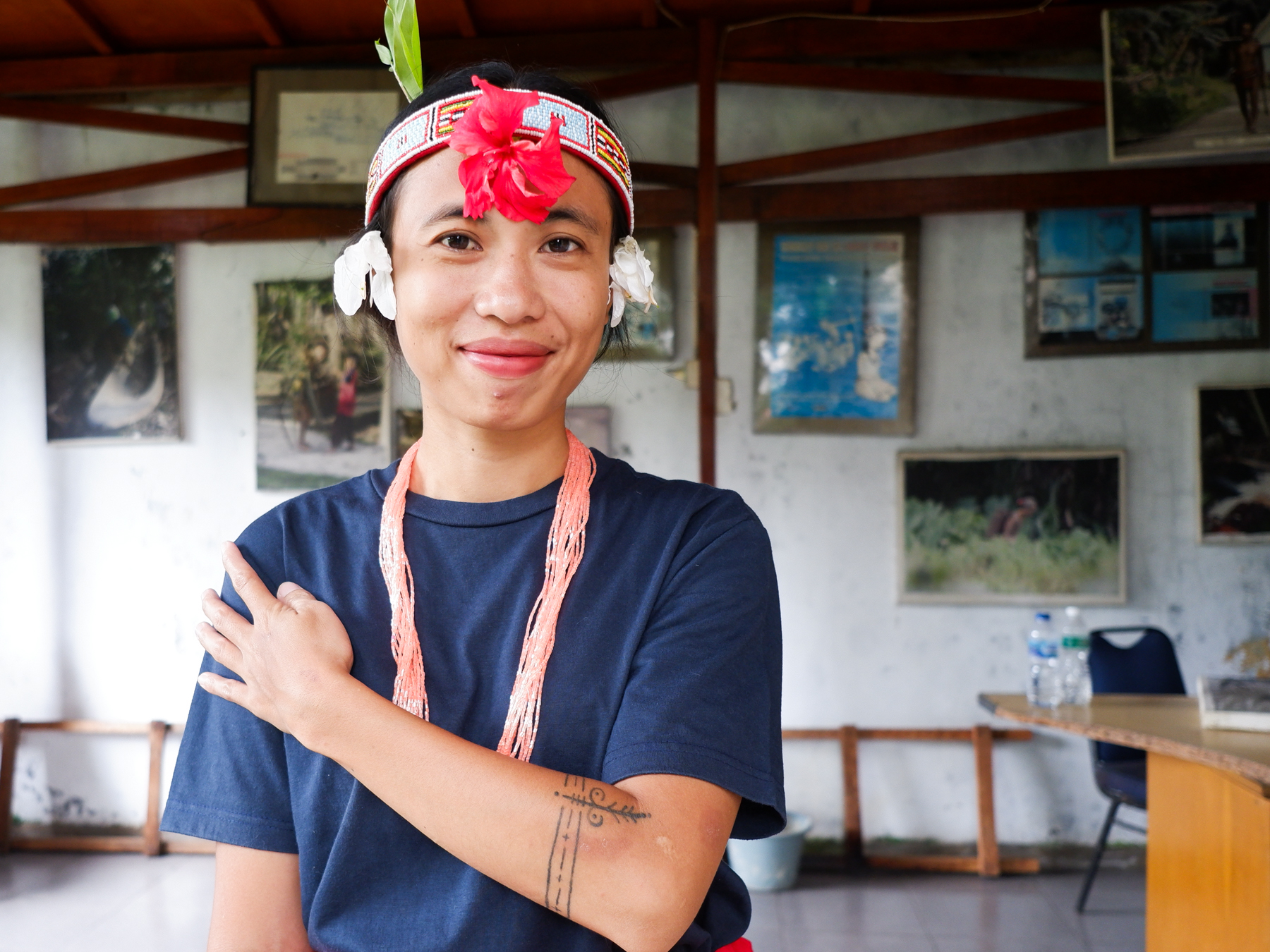
“I’m satisfied with having Mentawai tattoos, even though I don’t have the full set yet. Non-Mentawai people are usually attracted to them. They often say, ‘Mentawai tattoos, right?'” Firah said.
The response back home in Sipora was different. Some neighbors judged her harshly.
“They called me an indecent woman. But I told them it’s arat lagai, Mentawai culture. Why shouldn’t I have them?” she said.
Her parents didn’t mind the tattoo, but her younger sister asked her to remove it.
“My sister criticized me the most. She said it was forbidden, but I actually added more tattoos,” said the anthropology graduate.
Sumario Tatubuket, Firah’s neighbor and friend, did something similar. He got his first tattoos just before graduating from Andalas University in December 2022.
“I asked my parents’ permission. I told them that since I studied history, I wanted to help keep old Mentawai culture alive,” he said.
His parents were fine with it.
“My father said, ‘Okay, as long as you’re ready for the consequences if some employers won’t hire you because of the tattoos,'” he said.
Sumario went to Letcu and had his left leg tattooed, then his left arm.
“I’m halfway done. Eventually I’ll have them all,” Sumario said.
He said non-Mentawai people reacted positively to his tattoos.
“I once went to a bank in Padang wearing shorts. People saw my tattoos and got really curious about them,” he said.
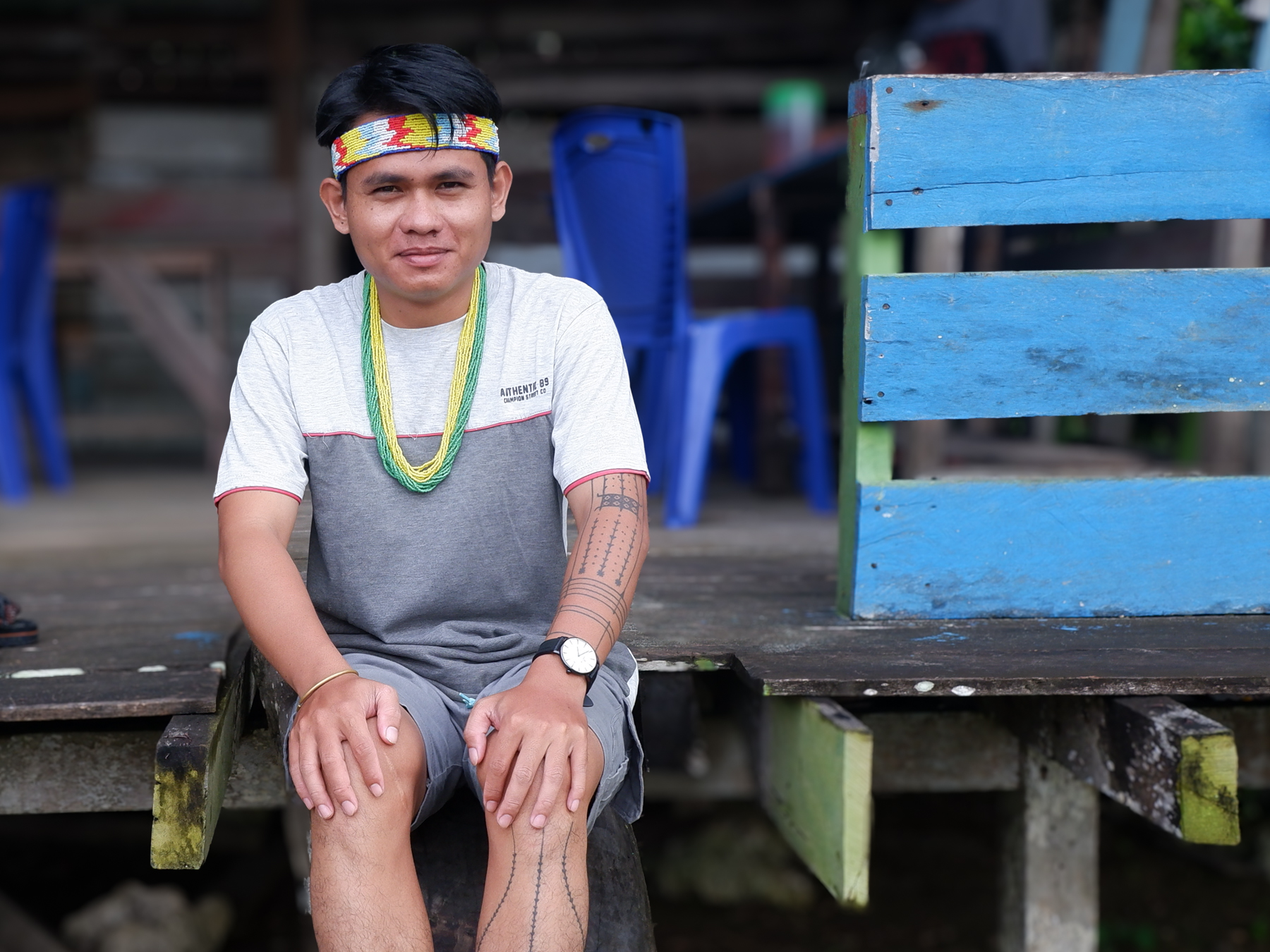
Negative views, Sumario said, actually came from Mentawai people themselves.
“Some say I look like someone from ancient times. Some say I need to understand the culture first before getting tattoos. Those critics don’t even have tattoos themselves,” he said.
None of this discouraged Sumario. He felt increasingly drawn to the tradition.
“I want to complete my tattoos so I can tell outsiders about Mentawai through what’s on my skin,” he said.
Ardila Saleleubaja shared the same goal. The 26-year-old, now living in Maileppet Village, South Siberut, got a tattoo on her left wrist after graduating from the College of Foreign Languages Prayoga in Padang in January 2025.
Her older brother, Edo Saleleubaja, a sipatiti (tattoo artist), did the tattoo, assisted by a high school student learning the craft from him.
“It turned out really well. It’s a combination of Mentawai tattoo designs, like fishhooks, stars, and the uma roof,” she said.
Ardila had wanted a Mentawai tattoo for years.
“I want people to look at me and know I’m Mentawai,” she said.
Her parents weren’t initially happy about it. Even Edo pushed back, which surprised her since he’s a tattoo artist himself. They all worried employers wouldn’t hire her.
“I told them this is different. It’s a cultural tattoo, a Mentawai tattoo. I’ll find employers who are okay with it,” she said.
***
Most young Mentawai graduates with traditional tattoos navigate the job market cautiously, prepared to explain the cultural significance of their tattoos to skeptical employers. Rus Akbar Saleleubaja went in the opposite direction, building his professional identity around his tattoos.
Rus worked as a journalist in Padang for over 20 years, covering Mentawai issues. He studied anthropology at Andalas University and ran MentawaiKita.com.
In 2018, the 45-year-old man had both of his arms tattooed with traditional Mentawai designs. The motifs matched those that sikerei traditionally wore.
“I decided to have tattoos because I wanted to help preserve Mentawai’s cultural heritage,” Rus said. “These are ancestral tattoos, so I wear them because I’m Mentawai.”
A friend did the tattoos with a tattoo machine, but Rus wasn’t satisfied with the result. He went to Kora Sakoddobat, a young sipatiti from West Siberut, who redid them.
“He added a crocodile skin design, which is a signature style of West Siberut. I got tattooed on both arms and it took almost six hours,” Rus said.
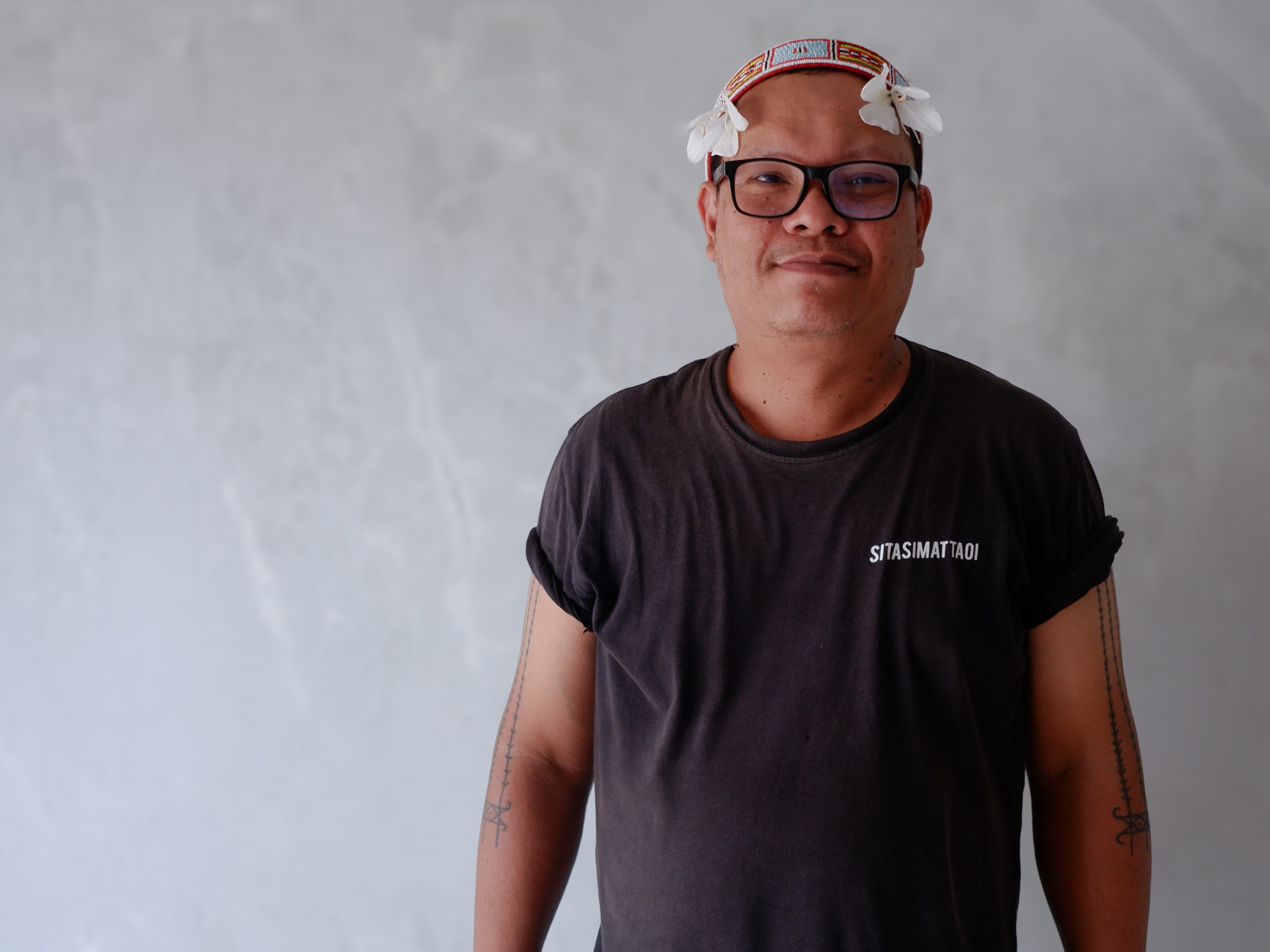
Rus said his tattoos never caused him trouble at work, whether he was reporting at government offices, police stations, or elsewhere. People understood they were cultural, not gang-related.
The only pushback came from his hometown in South Siberut.
“They say I look like a backwoodsman, like someone really old-fashioned,” he said, laughing.
Mentawai Tattoos Reborn
Rev. Parlindungan Sababalat, Ephorus (the highest leader) of the Mentawai Protestant Christian Church (GKPM), said that church documents have never explicitly banned tattoos. What the church has prohibited, he added, are the rituals of Arat Sabulungan, the Mentawai people’s ancient belief system.
“Maybe the German missionaries who came long ago were too strict. They destroyed everything connected to the Mentawai culture because they saw it as part of the Sabulungan practice. So, slowly the people abandoned their own culture, including the practice of using tattoos, and I regret that, too,” he said.
Parlindungan said tattoos are a marker of Mentawai identity, not a symbol of the Arat Sabulungan faith. What the church prohibits, he explained, are Arat Sabulungan rituals, including healing practices that involve invoking spirits.
“If they do that, congregation members will face ‘church discipline’. They will be ostracized, unable to receive baptism and forbidden from Holy Communion,” he said.
Gabriel Sakeru, the head of the North Pagai district, said he believes that reclaiming the Mentawai identity through tattoos is important for the younger generation. The 51-year-old from Maileppet, South Siberut, has tattooed his legs and his left arm with traditional Mentawai motifs.
Letcu tattooed his arm during the 2016 Mentawai Charm Festival in Tuapeijat and his legs in 2019.
“I have tattoos to show I’m Mentawai,” he said.
After getting tattooed, Gabriel said other Mentawai civil servants taunted him, telling him he looked like a man from the past, covered in tattoos.
“When I attend meetings wearing short-sleeved shirts, my arm tattoos are visible. Some say I look like the King of Thailand. I don’t care what they say. The regent has no problem with my tattoos anyway,” he said.
Among the GKPM congregation, Gabriel said, no one had issues with his Mentawai tattoos.
“When I volunteer at church, I wear shorts, so the pastor can see the tattoos on my legs. I told him, ‘If the elders get to heaven by doing good deeds, hopefully I’ll still make it to heaven with tattoos, too,’” he said.
Two years earlier, I asked Gabriel whether he planned to add more tattoos, including a large piece across his chest. He was enthusiastic then. But when I asked again in mid-June 2025, his answer had changed.
“I don’t think so. It’s enough. If I were still under 30, with tighter skin, maybe,” he said.
Even though the church accepted tattoos as a part of Mentawai cultural identity and many young people were getting tattooed, this wasn’t enough to guarantee their freedom, said Markolinus Sagulu. The 27-year-old led the Mentawai Student Forum, or Forma, an organization for Mentawai students in Padang.
Marko, as he is known, said his organization would push the Mentawai Islands Regency government to create a regional regulation to protect Mentawai tattoos.
“A law is important so that Mentawai tattoos have legal standing as cultural heritage, and to protect Mentawai people who have them,” he said.
Currently, Mentawai students with tattoos worry about finding employment because some employers refuse to hire individuals with tattoos, Marko said.
“Students who want Mentawai tattoos fear this discrimination. I experienced it myself when I was at UNES [Ekasakti University in Padang, West Sumatra] a few months ago,” he said.
Marko recalled how a lecturer scolded him, asked why he was tattooed like a thug and told him to cover it with long sleeves.
“I told him, ‘This is my culture. Why can other regions promote their culture while we, as Mentawai people, can’t show our identity with our cultural tattoos?'” he said.
A regional regulation protecting Mentawai tattoos would prevent discrimination in hiring, Marko said. With such a law, Mentawai people would have legal grounds to challenge employers who reject applicants simply because of their tattoos.
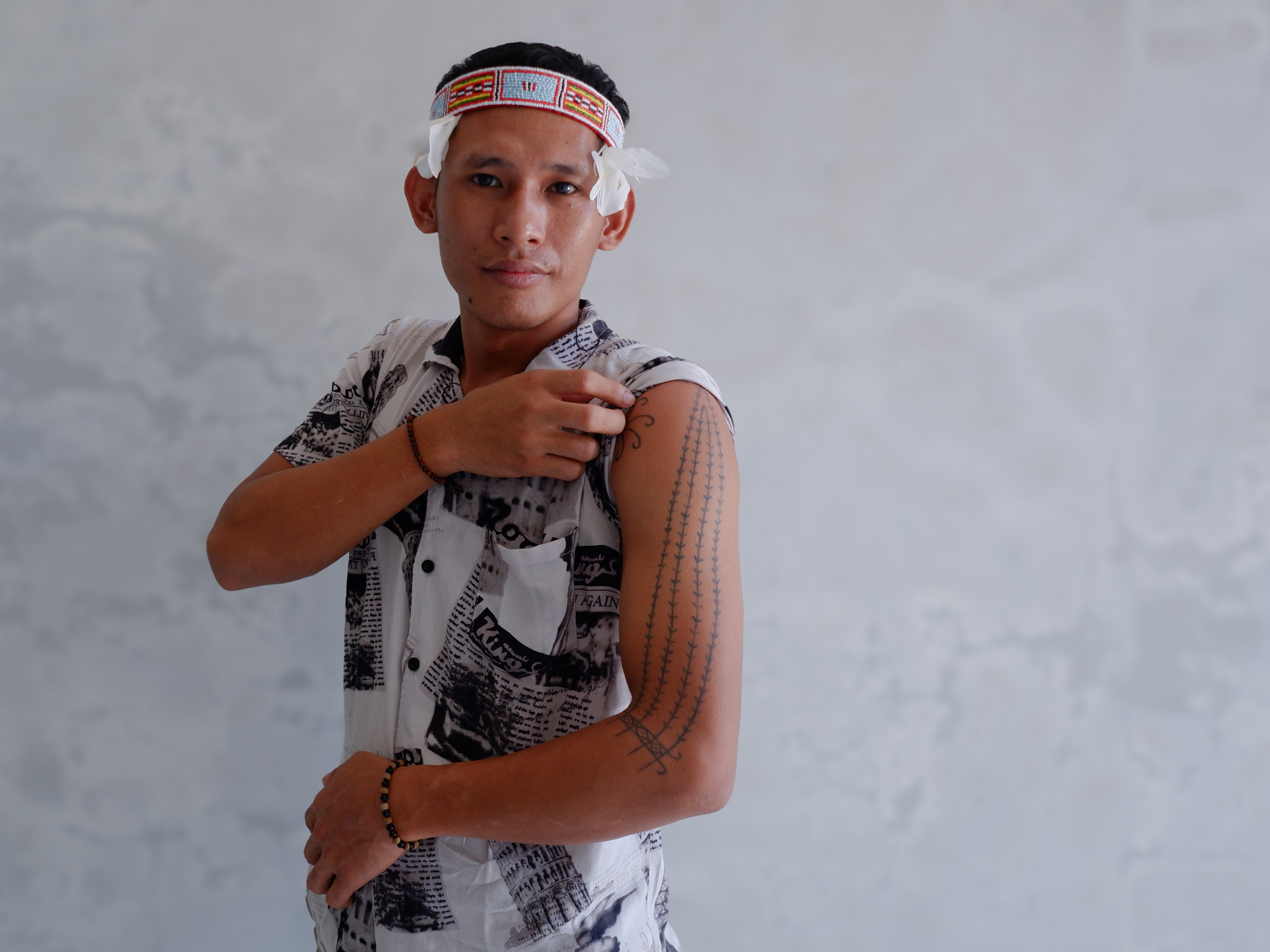
Marko got both shoulders tattooed in early 2024 with the sibalu-balu motif, a compass rose design distinctive to his village in Katurei, West Siberut. His left arm features the rattan thorn motif. He decided to get tattooed after learning how the government had historically intimidated the Mentawai people, including punishing those with tattoos.
“My family is very proud that I have Mentawai tattoos. My father and mother are proud, even though they don’t have tattoos themselves,” he said.
Rinto Wardana Samaloisa, the regent of the Mentawai Islands, was cautious about creating a regional regulation to protect Mentawai tattoos. He said it would be difficult because regional regulations are binding—an odd objection, since laws are meant to be binding.
“If we make a regulation, what kind would it be? Would it require Mentawai people to wear tattoos?” said Rinto, who is also a lawyer.
However, he added that protections for Mentawai people with cultural tattoos, designed to ensure they can work anywhere, should be pursued through indigenous peoples’ laws.
Rinto said the regency has no policy against Mentawai tattoos, including for civil servants.
“It’s part of Mentawai culture. If civil servants or individuals seeking to become civil servants have Mentawai tattoos, there is no problem,” he said.
“I want tattoos too.”
This piece, originally published in Indonesian, was translated by Anne Parisianne. The English-language editor was Winda Charmila.