
Orang Laut, literally meaning “sea people”, were once the primary guardians of the sea. But the ambitions of modern development have slowly pushed them off the water, eroding their seafaring skills and dimming what remains of their traditions.
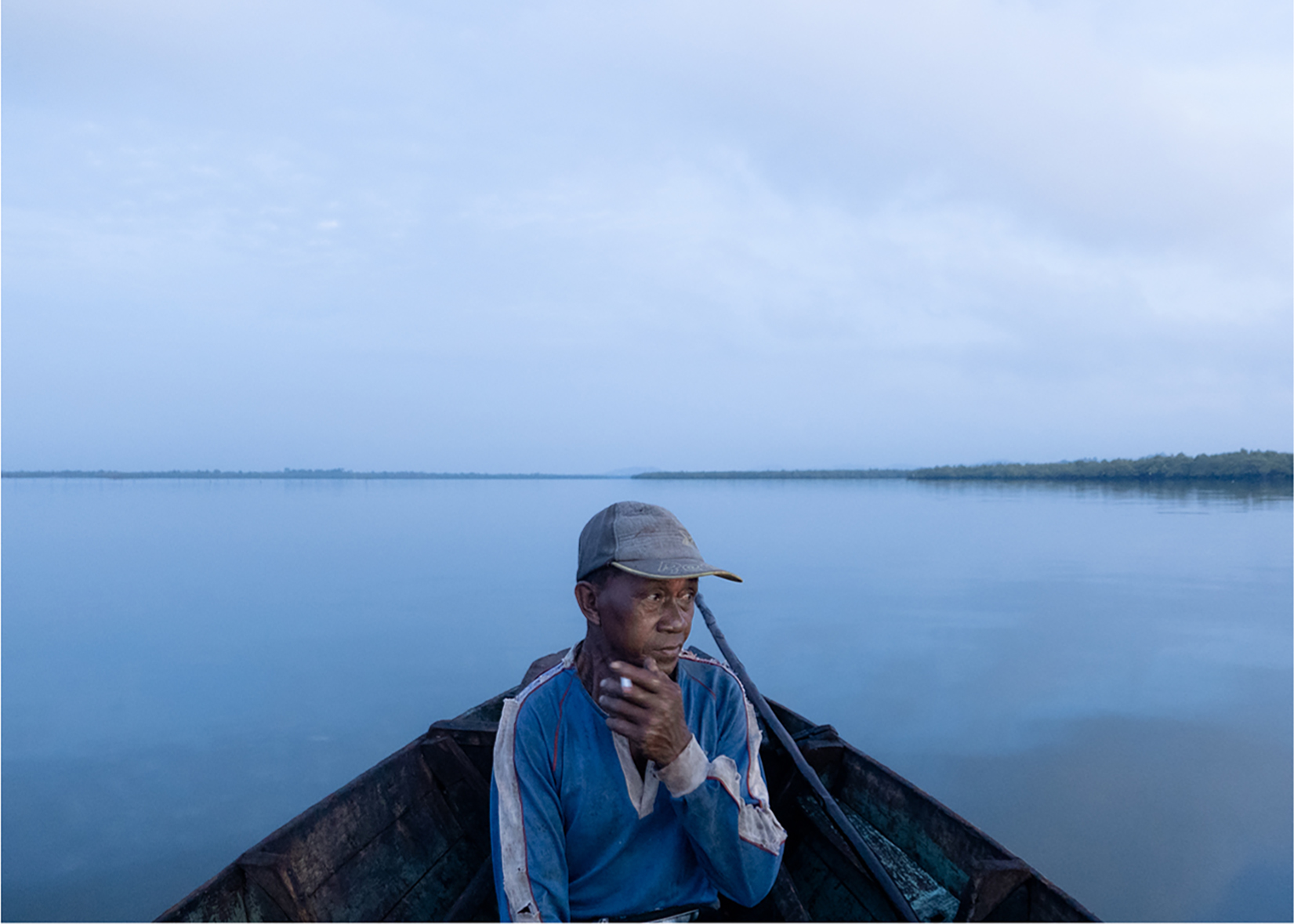
Badak, 65, had yet to return from the sea, even as the sun began to set. A local Orang Laut leader in Indonesia’s Riau Islands, he usually left at dawn and was back by 10 a.m.
While waiting for Badak to come home, Peri, his wife, passed the time by sharing some family stories, occasionally pointing to a wedding photo of their daughter on the living-room wall.
Their daughter, Peri said, is now a widow. Her husband managed a charcoal kiln and collected mangrove wood for a living, but died two years ago from pneumonia complications after contracting Covid-19.
“I used to have 10 children. Three are still alive. The others have died,” said Peri, 57.
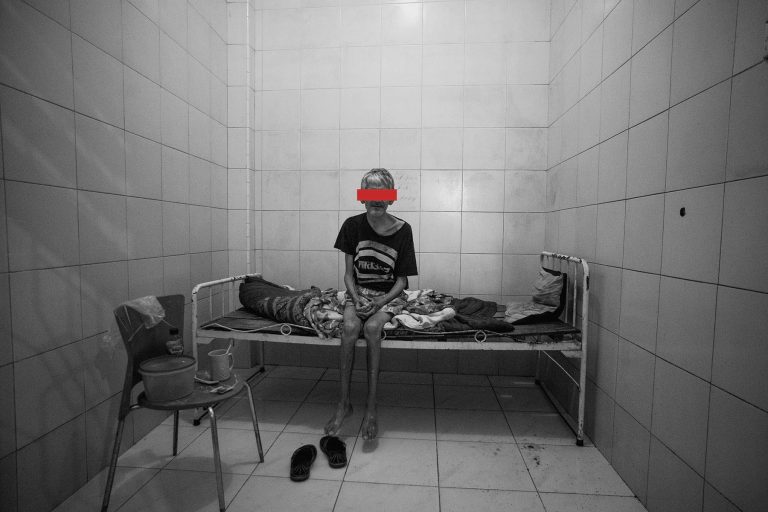
“Out at sea the winds are harsh, and we often come down with colds. When we’re a little sick, we never go to the hospital.”
A common cold might seem minor. But for those who live and roam at sea, far from reliable healthcare, even a mild illness can turn life-threatening.
As she folded clothes, Peri said that when a member of the Orang Laut community falls ill, the family usually turns to a shaman. And when a woman is about to give birth, they look for a bedan, or midwife.
“If you’re sick, we use spells,” she said. “For medicine, we rely on wood and leaves from the forest.”
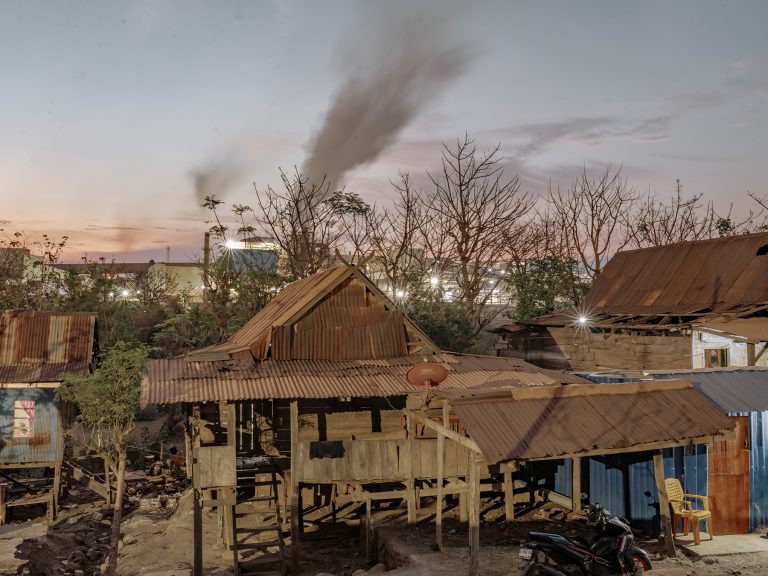
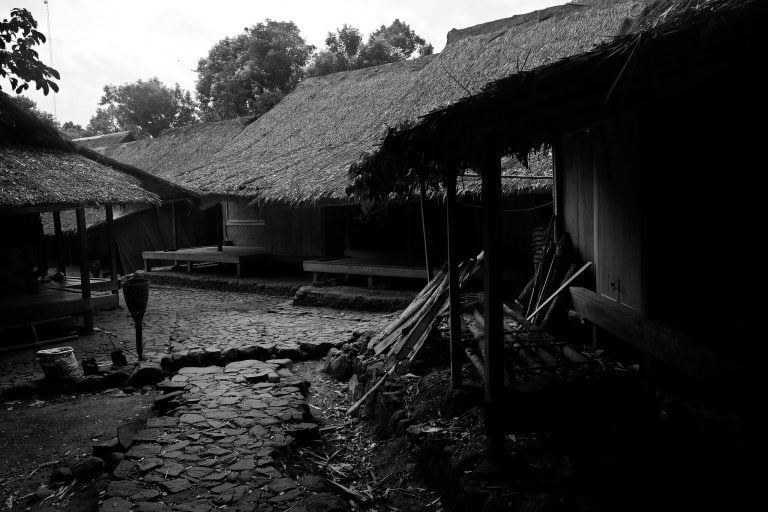
Badak, Peri, and dozens of other Orang Laut live in stilt houses along the shore in Tanjung Gundap, a coastal village on Batam Island. They are part of a wider Orang Laut presence across the Riau Islands, spread across an estimated 44 settlements.
The Orang Laut were traditionally nomadic, spending much of their lives at sea in small boats fitted with kajang, a palm-leaf thatch roof. A group typically consisted of around 30 kajang-covered boats, each home to a father, a mother, and their children.
When a boy reaches adolescence, a new kajang boat is built for him and he moves onto it on his own. There, he learns to spear-fish and eventually finds a partner to start a family. In this way, the cycle of life among this seafaring community continues.
The Orang Laut are often described as part of the Old Malay (Proto-Malay) peoples who migrated across Sumatra via the Malay Peninsula between 2500 and 1500 BC. Historical studies suggest that from the era of the Srivijaya Kingdom through the Riau-Lingga Sultanate, the Orang Laut played a crucial role as maritime guardians, protecting and patrolling waters from eastern Sumatra to the Malay Peninsula.
The Orang Laut are highly skilled at reading the seasons. They know where and when fish will gather, and that knowledge guides when this nomadic community moves. Aboard their kajang boats, they keep dogs and bayan birds, believed to ward off disaster and to serve as natural alarms when the ocean weather turns unpredictable.
During the New Order era, however, policies aimed at accelerating economic growth pushed many Orang Laut away from the sea.
From the early 1970s to the 1990s, Indonesia’s New Order government pushed rapid economic development through its Five-Year Development Plans (Repelita). The drive reached across the archipelago, including Batam. Alongside Johor and Singapore, Batam was envisioned as a hub in the “golden economic triangle” of the Strait of Malacca.
At the time, the Orang Laut, many of whom still lived nomadically at sea, were seen by the state as isolated and “underdeveloped”. Hence, the government introduced the Isolated Community Welfare Development (PKMT) program in the Riau Islands. Through it, thousands of Orang Laut received housing assistance aimed at encouraging them to leave the sea and settle on land.
Many chose to settle and leave behind their ancestral traditions. Others continued to live a nomadic or semi-nomadic life. But as industrial development surged across Batam and its surrounding areas, Orang Laut communities became increasingly marginalized and were pushed aside by industrial, mining, and tourism projects.
Peri and Badak were among those who settled. Originally from Tumbar Island, they moved in 1982 to manage a charcoal kiln at the request of a tauke (business owner) named Jekim from Buluh Island. The idea was simple: when fishing was poor, they could rely on mangrove wood for charcoal as another source of income.
However, after the government introduced forest protection and conservation rules, the Orang Laut could no longer freely harvest mangrove wood. Many charcoal kilns had to shut down.
“We’ve been at sea since birth. We’ve lived on the water since our ancestors’ time, in the kajang where we find food, give birth, and live with no home on land,” Peri said as she served fritters and tea.
“But now I can’t stay out at sea for long anymore. My head gets dizzy, and I feel nauseous.”
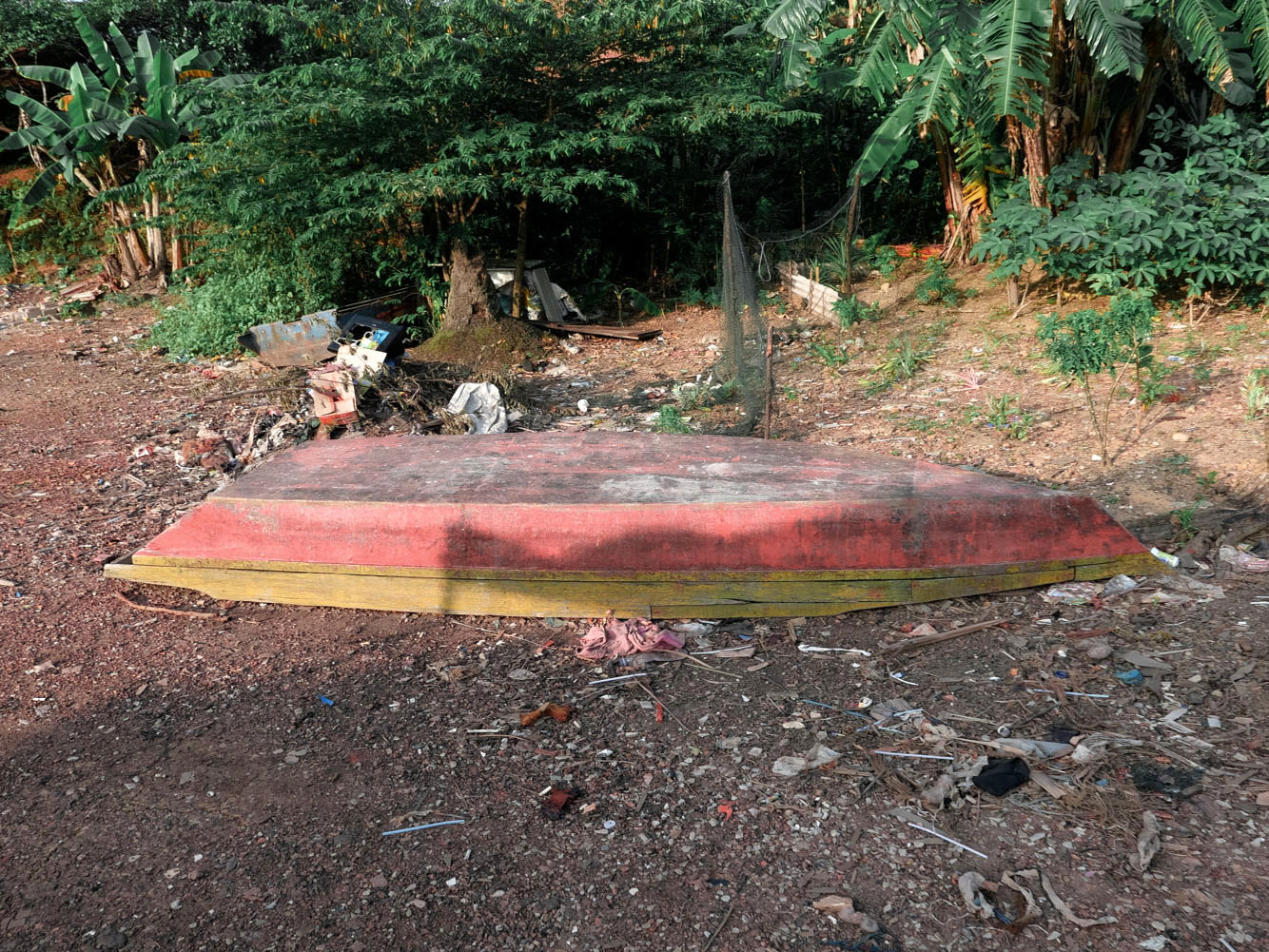
There are no more kajang boats in Tanjung Gundap. Motorized boats have taken their place. The nomadic way of life has quietly disappeared.
From Fish to Charcoal
Dawn had broken, but the rooster had yet to crow. Only the rising tide could be heard, gently slapping against the rotting wooden posts below.
Badak took a sip of coffee and one last drag from his cigarette before putting on a blue tracksuit printed with the words “SMK Muhammadiyah Kota Batam” (Muhammadiyah Vocational School of Batam City). The color had faded, and the sleeves were frayed. He paired it with gray jeans stained with mud.
After grabbing his backpack and waist bag from the kitchen, Badak stepped outside and carefully made his way down the stairs of his stilt house, followed by his 34-year-old son, Yanto.
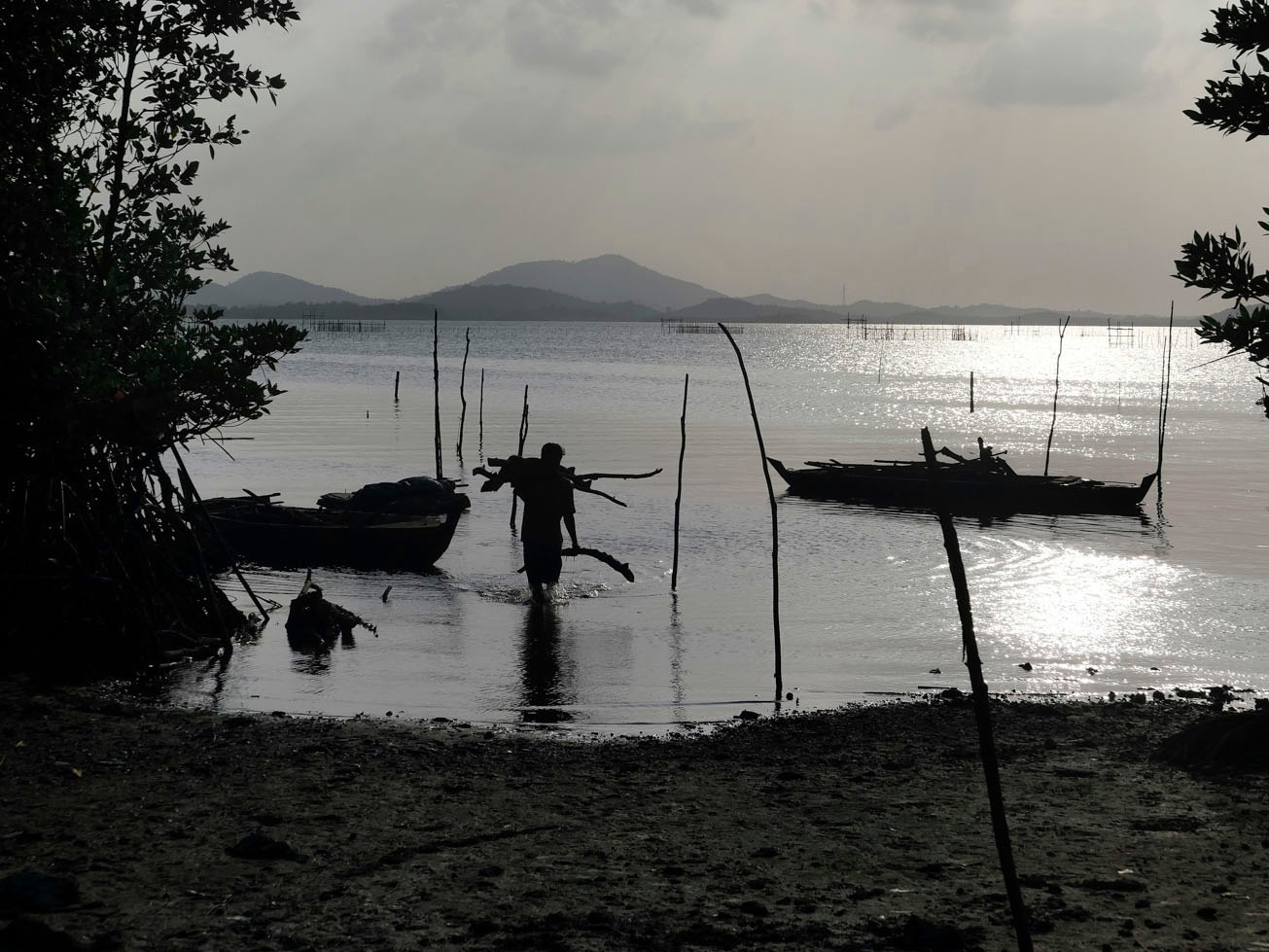
Together, they boarded a small motorboat. Badak sat up front while Yanto took the wheel. This morning, they were headed out to collect mangrove wood for charcoal.
The sun was rising over the eastern horizon as their boat glided toward a dense mangrove stand. Yanto cut the engine and took up the oars. Badak rose and used his paddle to push them through, clearing a path into the mangroves.
Badak gently pushed the boat away from mangrove roots jutting from the murky water. The channel was narrow, only wide enough for one boat.
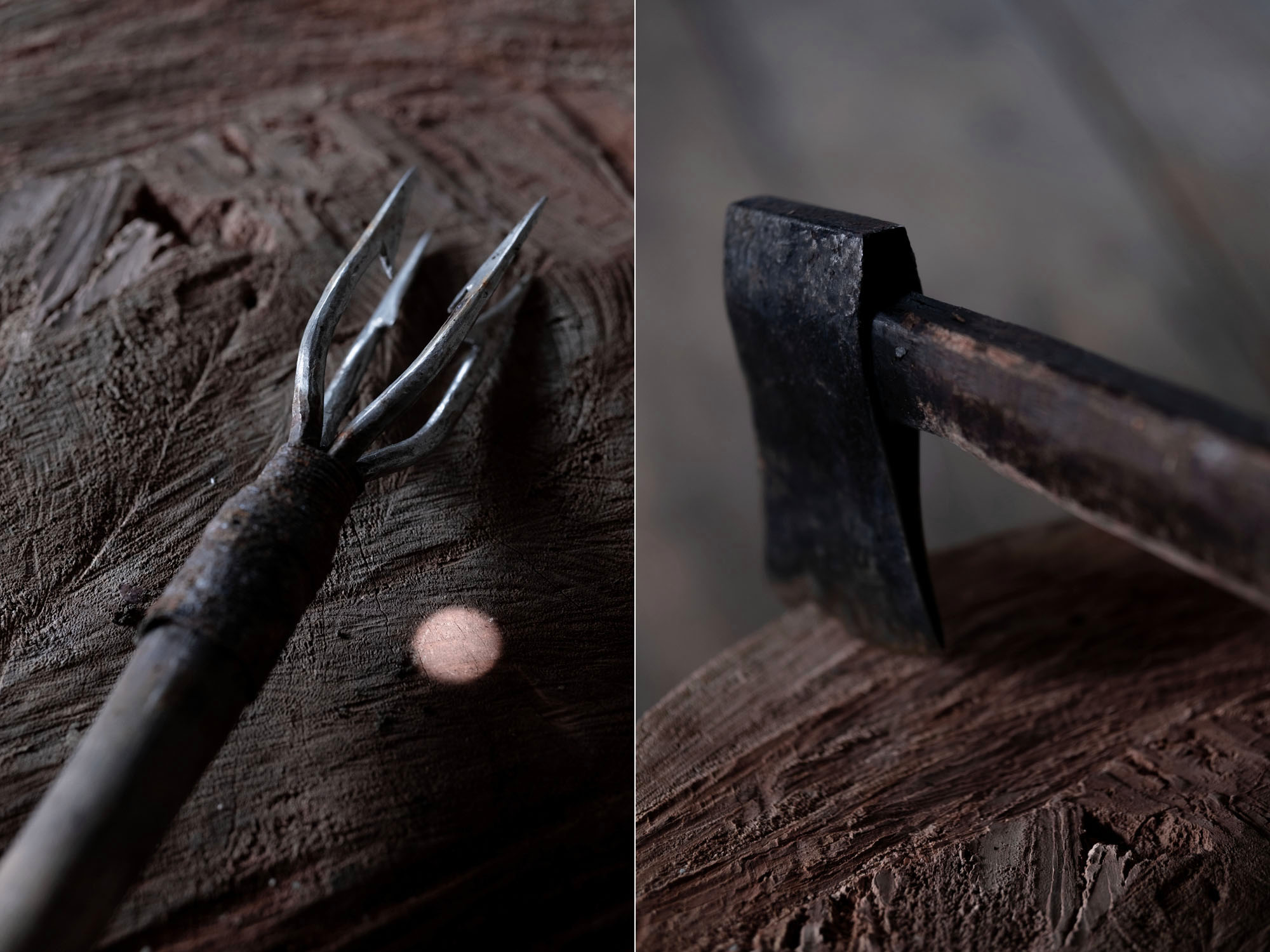
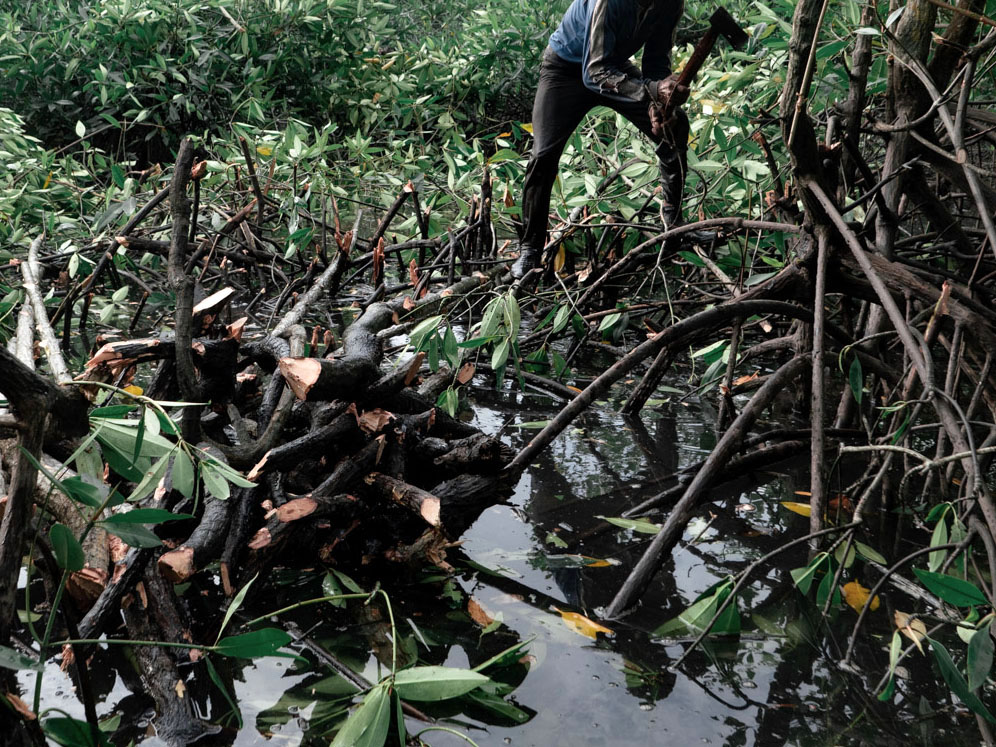
After about 15 minutes, they reached a more open stretch of water. The boat drifted to a stop in a tangle of roots. Badak sharpened his axe, then stepped into thigh-deep water. He was small but agile. In seconds, he disappeared into the mangrove thicket, with Yanto close behind. Moments later, metal rang against wood, and one by one, mangrove trunks came down.
“We choose the old trunks, and we don’t cut the young ones. And we don’t cut the roots, so the trees can grow back quickly,” Yanto said.
“It’ll be thick again in about four to five months,” Badak added.
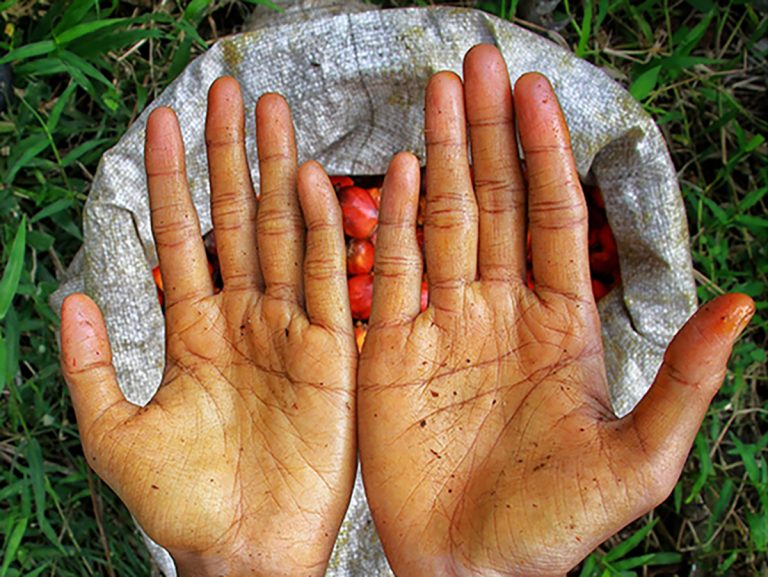
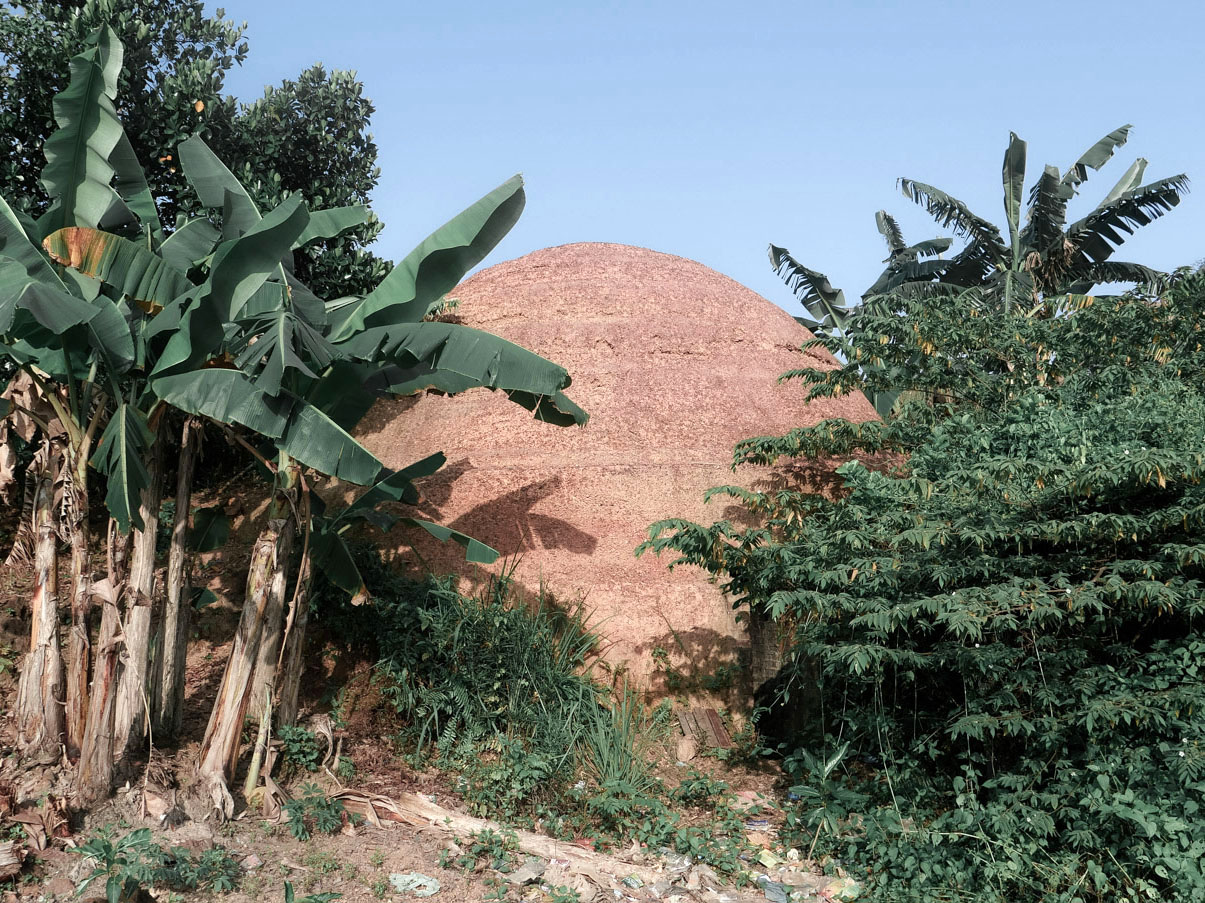
They can collect 600 to 700 kilograms of mangrove wood a day. The cut trunks are hauled to a charcoal kiln, stacked to dry, and weighed. A ton of dried mangrove wood sells for about Rp200,000 (US$12). In a typical month, they gather three to four tons, earning roughly Rp600,000 to Rp800,000.
“We can’t cut too much, or the government will be angry,” Badak said. “But if we don’t, we won’t make much money.”
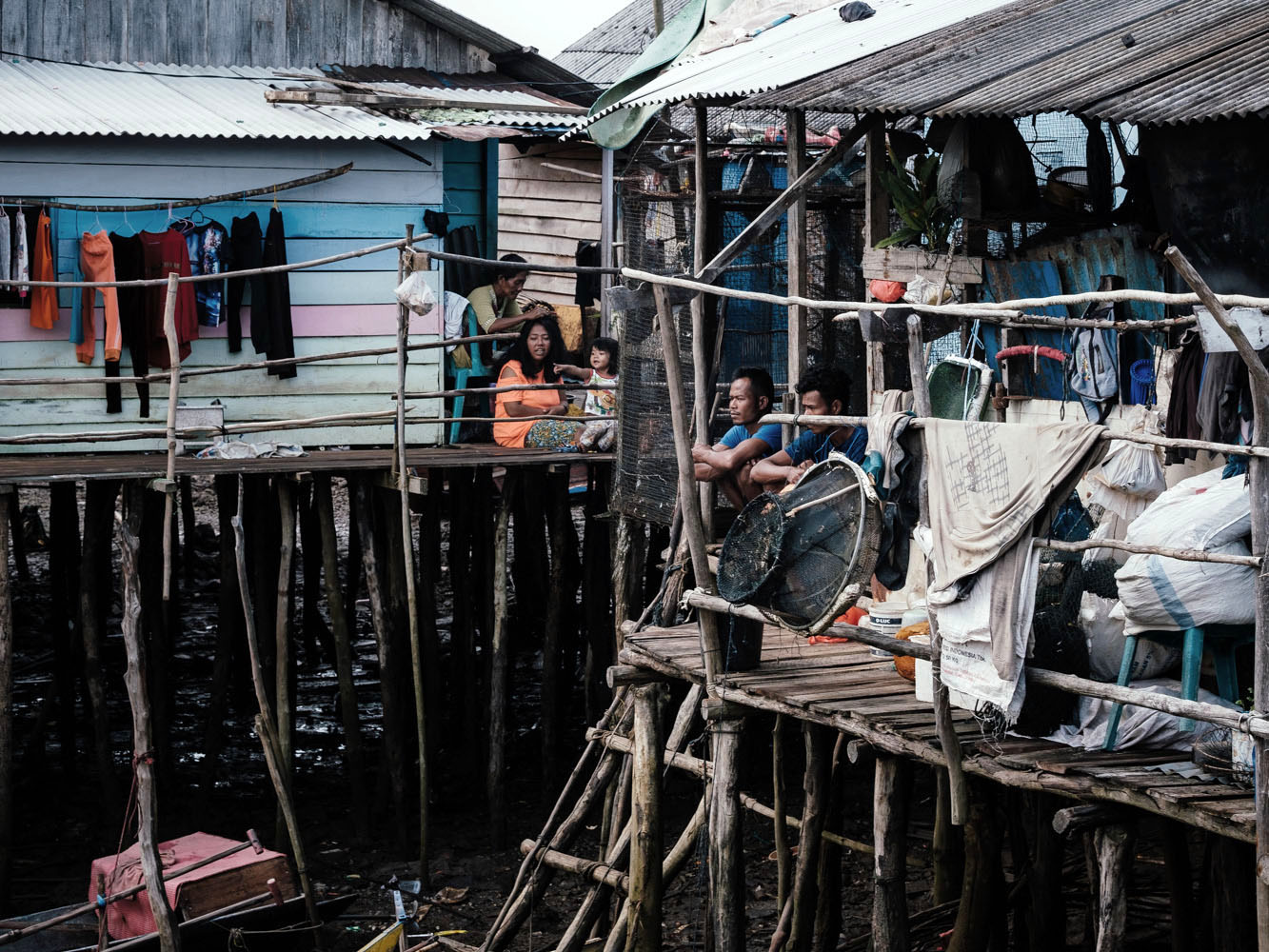
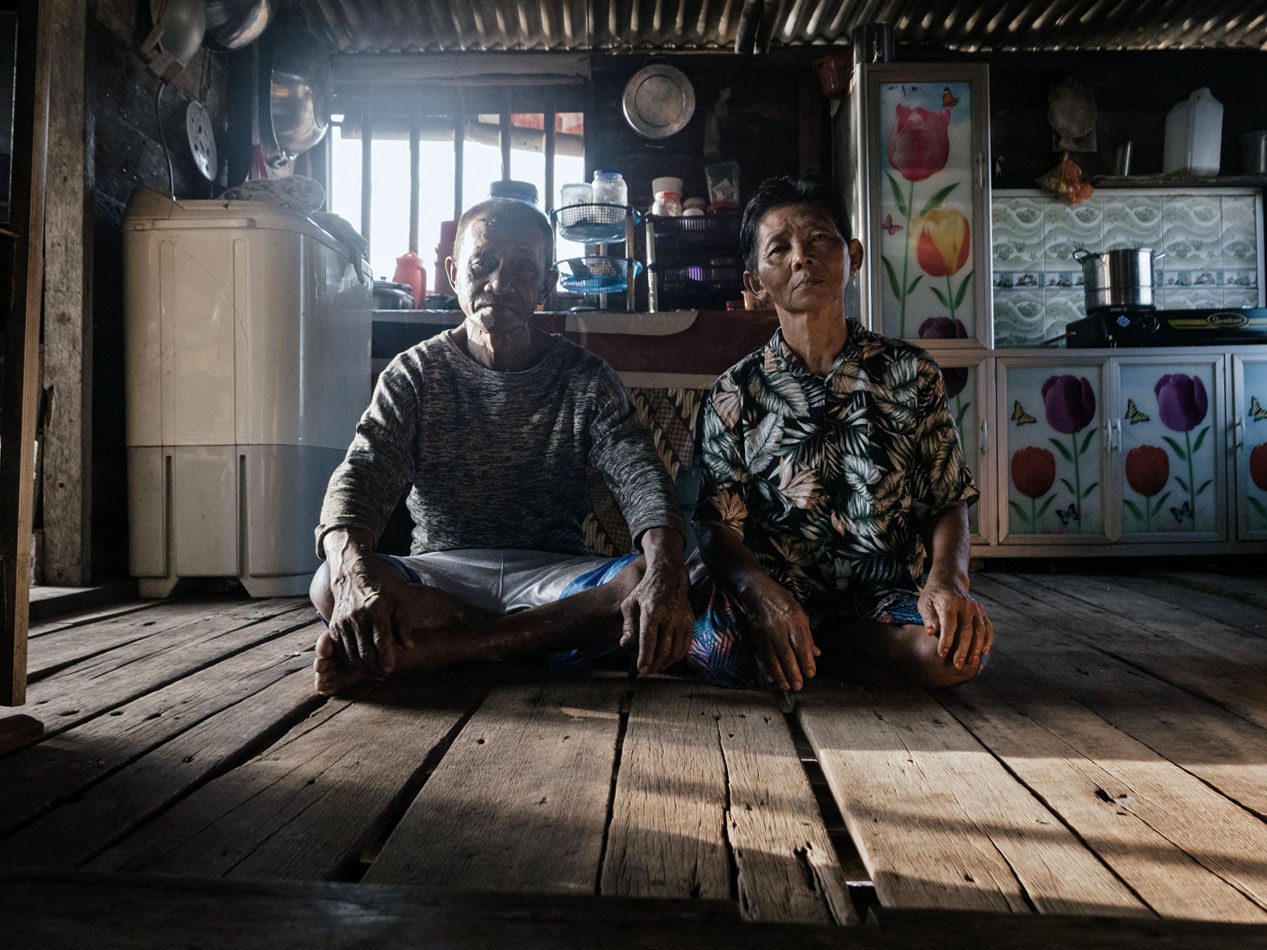
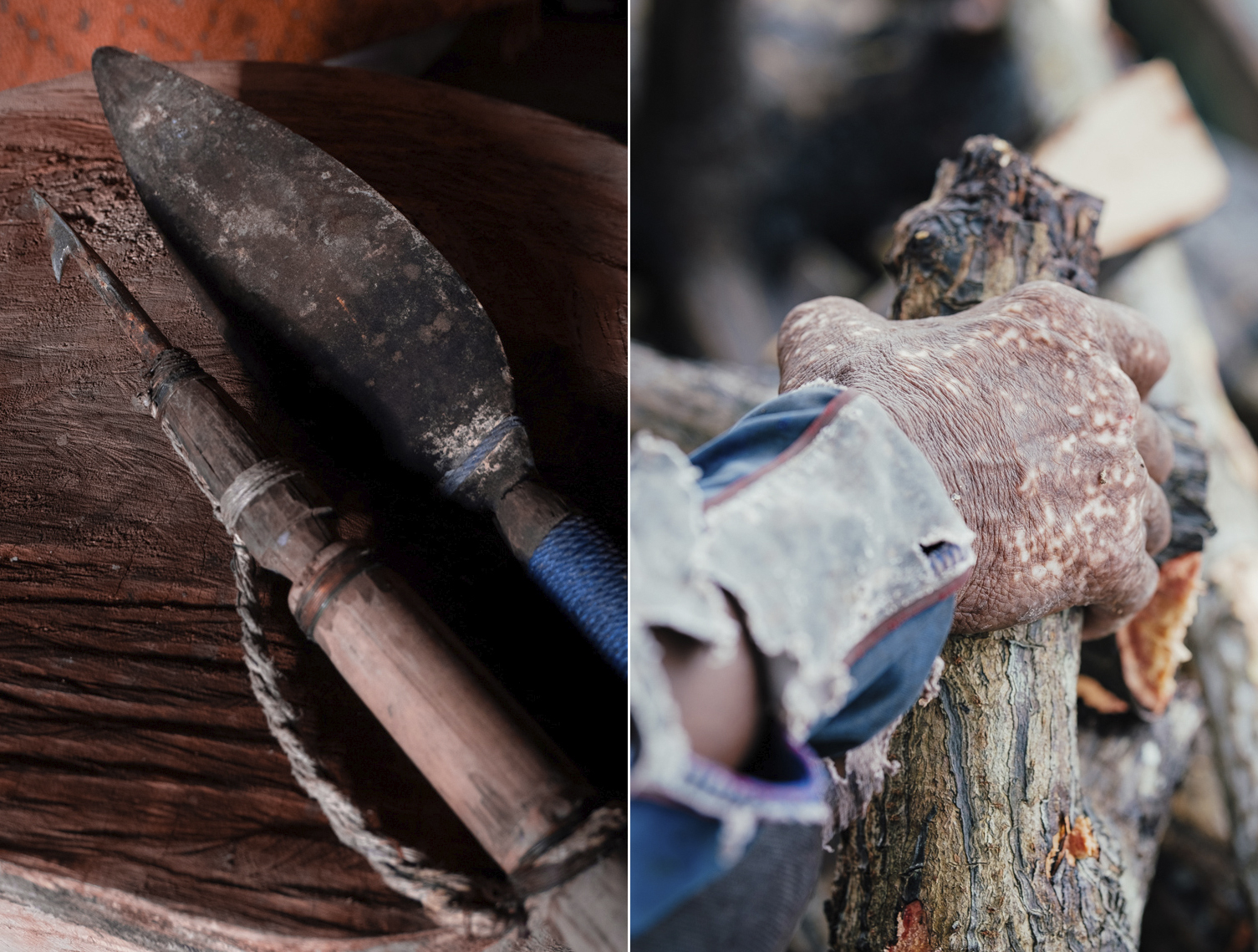
The Orang Laut in Tanjung Gundap do not have many choices. They understand the government’s ban on cutting mangroves. But fish are increasingly scarce, crab traps rarely turn a profit, and they lack the skills needed for land-based work.
So gathering mangrove wood for charcoal remains their only viable option, a livelihood they have relied on for years.
***
Two hours passed. One by one, the logs were loaded onto the boat. Once it was full, Yanto climbed aboard and began paddling away, while Badak stayed behind to continue working.
After a short stretch, Yanto started the engine and headed toward a charcoal kiln, cutting through waters that he said were once teeming with fish.
“In the past, it took only half an hour to catch a dozen kilos, even 20 kilos, of fish,” Yanto said. “Now, finding a kilo or two is difficult.”
He said fish catches declined after the installation of gas pipelines he believed belonged to the state-owned gas company Perusahaan Gas Negara (PGN).
“Maybe the seabed was damaged from all the dredging and the installation of the gas pipelines,” Yanto said.
“PGN dredged the area for five months, and residents received Rp700,000 in compensation.”
PGN, however, denied installing gas pipelines in the waters around Tanjung Gundap. Any pipeline network there, it added, does not belong to PGN or any of its subsidiaries.
Overfishing and pollution from mining and industrial waste have also made fish increasingly hard to find.
Batam, which hosts several Special Economic Zones (KEK), is Indonesia’s largest shipbuilding hub. Of the country’s roughly 250 shipyards, 110 are on Batam, with around half clustered along the island’s west coast, not far from Tanjung Gundap.
Shipyard operations often involve sandblasting, including the use of silica sand, which can pollute the air and nearby waters. Coastal communities around Batam and nearby islands have also grappled with recurring black oil waste spills.
The Riau Islands were also once a major hotspot for sea-sand mining. In 2000, sea sand from the province was exported to Singapore for land reclamation. Dredging was blamed for ecosystem damage, murkier waters, and a decline in fish catches.
In 2022, the government issued a regulation banning sea-sand exports. But in May 2023, the ban was lifted and exports were allowed again, reviving pressures on fish populations.
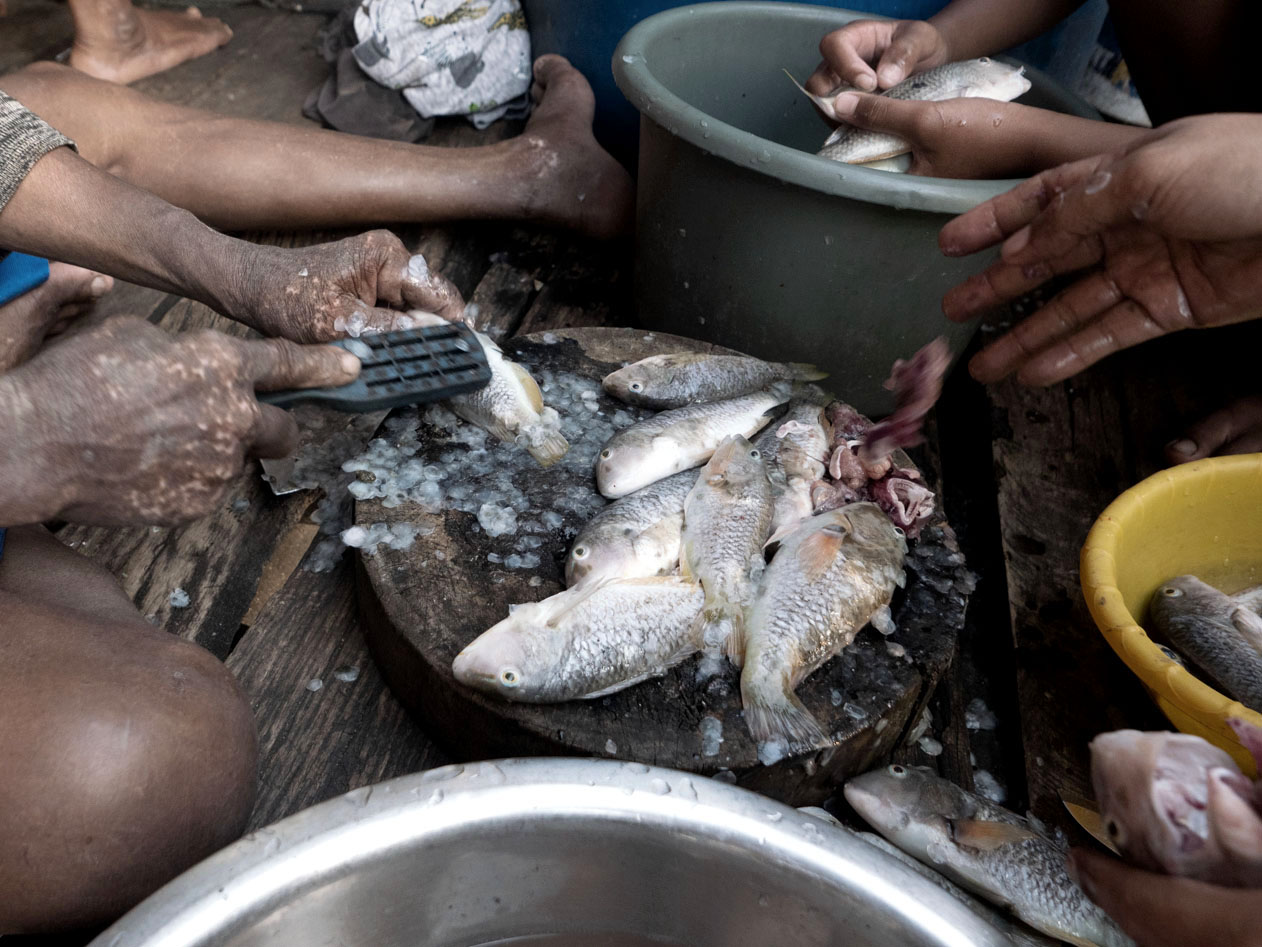
As a father of two, Yanto says he actually does not want to make a living collecting mangrove wood for charcoal. The pay is nowhere near what he once earned from fishing. At sea, he could make up to Rp700,000 a day—the same amount he now earns in a whole month gathering wood.
“If we had fish and crabs, we wouldn’t have to collect wood. We’d have enough to eat. We could sell some and keep the rest for meals,” Yanto said.
“Now we have to buy vegetables, side dishes, and rice, and that’s only if we have the money. If we don’t? We’ll end up eating our fingers.”
Prayers on Unsteady Ground
Rooted in a nomadic maritime tradition, the Orang Laut rely on nature for their livelihood and cultural identity. But rapid economic development in Batam and surrounding areas has brought an expanding web of resource concessions, and industry now shapes both sea and land.
In 2022, processing industries accounted for 58.05% of Batam’s economy, while construction contributed 20.23%, according to Statistics Indonesia.
For the Orang Laut, Batam’s boom came with displacement. The government pushed them to settle on land without providing education, skills for land-based work, or protection for their customary territories. Even then, their grip on land remained fragile.
In late 2022, Orang Laut families in Tanjung Gundap were told to move by a group claiming to be the area’s original inhabitants. The group said it owned the land. But the plot was legally owned by a tauke who had previously asked Badak and his family to settle there.
Later, residents learned the area was slated for a seafood restaurant. The move came as little surprise. Their settlement sits on valuable waterfront land, and a housing complex is now under construction nearby.
“Our problem living here is that we’re not allowed to form a neighborhood association [RT]. We’re not allowed to build new houses, and we’re even prohibited from cementing our homes,” Badak said.
The land dispute was settled by the Batam City Council earlier this year. Still, residents worry there may be further attempts to take over their homes.
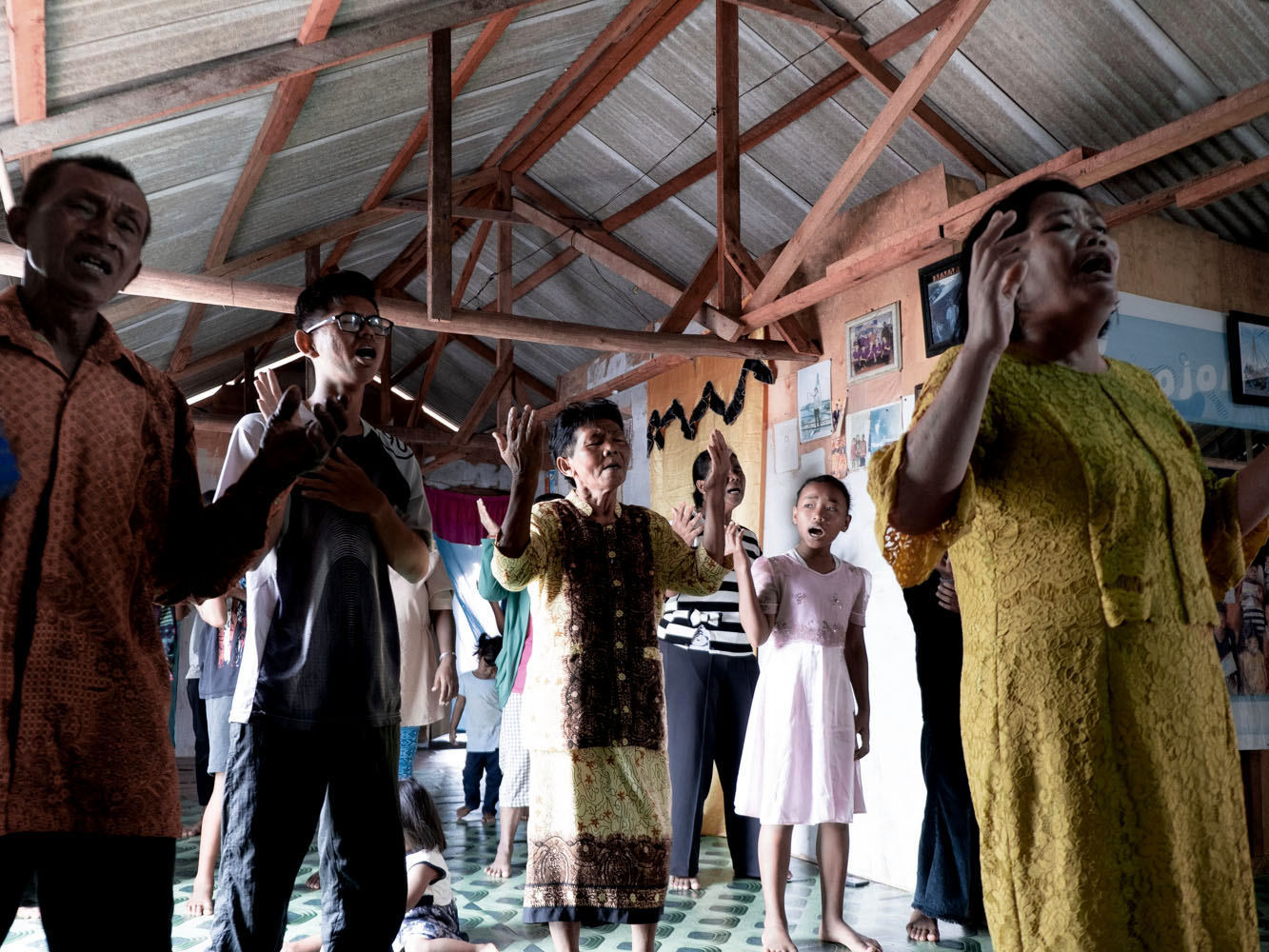
My conversation with Badak ended when a pastor from the Indonesian Bethel Church (GBI) arrived. Badak quickly grabbed his reddish-orange batik shirt.
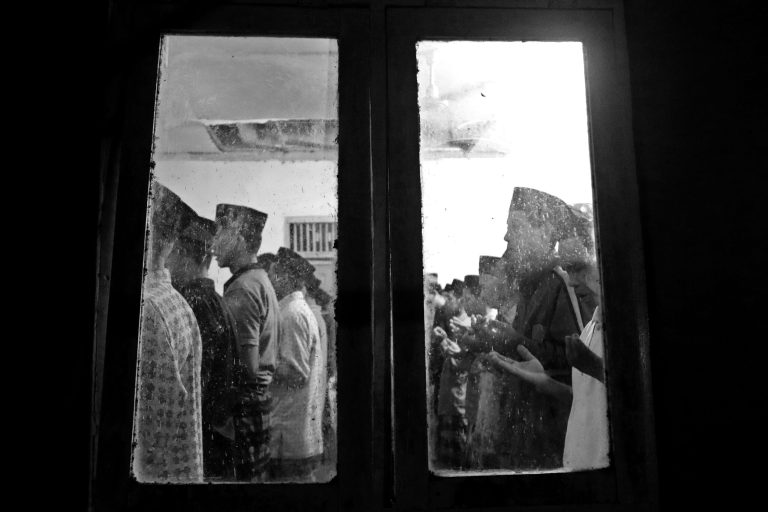
Before long, the pastor entered the house with a small group from the church, followed by a few neighbors. From inside, Bible verses were read aloud. Faint hymns drifted between the stilt houses.
This article is part of the #IndigenousPeople series and licensed under CC BY-NC-ND 4.0.
This photo story, originally published in Indonesian, was translated by Winda Charmila. The English-language editor was Viriya Singgih.